
The Fairy Tale Feminista
Answering life’s questions one fairy tale at a time.
A Fairy Godmother's Inner Life
When I first saw the Disney version of Cinderella, I was more interested in the Fairy Godmother than the girl who called her.
Let me quickly say, I have nothing against Cinderella. I know there’s a strong campaign out there against fairy tales in general because the romances are problematic. I think of them as more allegorical instead of aspirational. It’s how I’ve been able to write a blog called Fairytale Feminista without feeling my feminism is in any way questionable.
When I first saw the Disney version of Cinderella, I was more interested in the Fairy Godmother than the girl who called her.
Let me quickly say, I have nothing against Cinderella. I know there’s a strong campaign out there against fairy tales in general because the romances are problematic. I think of them as more allegorical instead of aspirational. It’s how I’ve been able to write a blog called Fairytale Feminista without feeling my feminism is in any way questionable.
To return to the purpose of this post, I wanted to know what happened to the Fairy Godmother (I’m capitalizing her title because she didn’t have a name) after she sent Cinderella off to the ball. Or what about the three fairies that kept Aurora, the Sleeping Beauty, safe in the forest for all those years? Or the old man in the Golden Goose, for that matter, who told the Simpleton where to find his prize?
Photo by Cibele Bergamim on Pexels.com
We never learn more about the helpers in fairy tales. Whether the stories give them credit or not, the helpers are the reason many protagonists are able to realize their dreams. And yet we see them come into the story and just as quickly retreat from it. Movies and books seem obsessed with the inner workings of the villain. Where’s the interest in the secondary or tertiary characters who move the story?
Who would you like to see from fairy tales turned into a story? Are there any you can recommend?
In the meantime, they say you should write the book you think is missing from the shelves. Stay tuned!
Write What You'll Never Know
I’m sure you’ve heard the saying, “Write what you know.” Few people interpret that correctly. Especially if what you write is speculative fiction. I’ve never moved through a realm using mirrors. I don’t have the ability to summon up spirits. And believe it or not, becoming a monarch of any kingdom, magical or otherwise, is beyond my lived experience. And yet, these are all things I’ve written about in my series and in short stories.
I’m sure you’ve heard the saying, “Write what you know.” Few people interpret that correctly. Especially if what you write is speculative fiction. I’ve never moved through a realm using mirrors. I don’t have the ability to summon up spirits. And believe it or not, becoming a monarch of any kingdom, magical or otherwise, is beyond my lived experience. And yet, these are all things I’ve written about in my series and in short stories.
“Write what you know” really means, learn. You want to write about an astronaut, learn about astrophysics. A medical thriller? Better find some info about medicine. What if you write fantasy or sci-fi?
Some writers of speculative fiction take the tack of answering any sticky questions by throwing magic at it and some do it well. Some don’t. I prefer (and I know this will sound counterintuitive) to make my magic as realistic as possible. Why? Because
I like to think we’re standing on the hairy edge of seeing all the magic, like stories about being whisked to Faery and as terrifying as that sounds, I’d like to make it happen
The realer it sounds, the more realistic the imaginary world will feel.
This, however, means I need to make some decisions about my story and “research the periphery.” What do I mean by that? Whatever surrounds your magic should sound as plausible as possible or at least have an explanation for the fantastical. For example, one of my projects involves a dragon shifter. This is not a new concept, but I’ve had issues with regular sized people suddenly growing to colossal proportions.
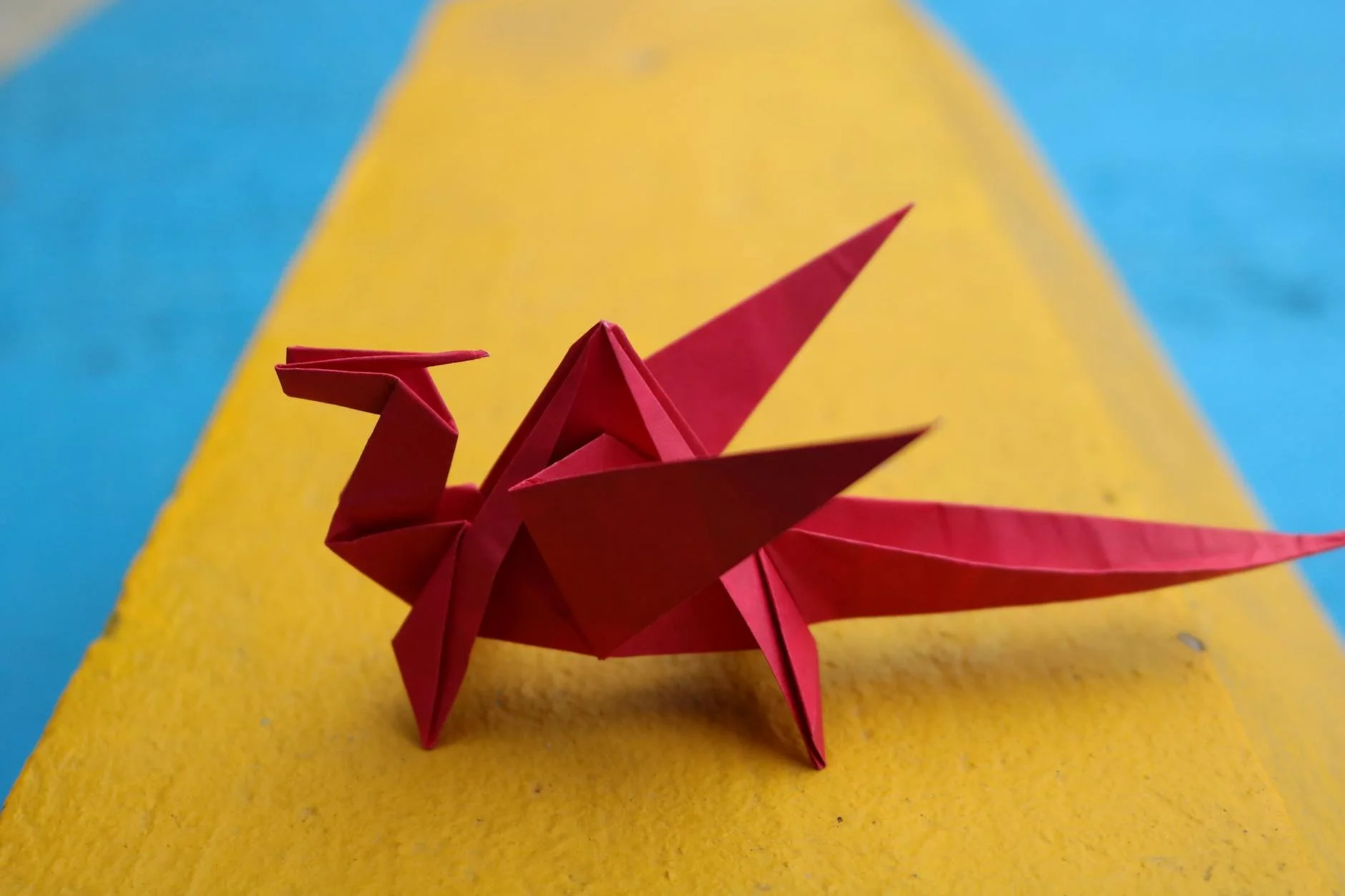
Photo by Luis Medina Diseu00f1o on Pexels.com
Where does all that mass come from? Where does it go?
I know plenty of people who are fine with this phenomenon and say, “It’s magic” but I don’t like that answer. It’s like an itch inside my brain.
Instead, I figured out how my character carries extra mass both sub-dermally and skeletally. It’s a small thing, but it made me feel better about the process of shifting. It may never make it into the story, but I know and sometimes, it’s enough.
How about you? Do you like your magic based in reality? Can you “go with the flow”?
Fairy Tales for All
I came to an odd and slightly disturbing realization the other day. I haven’t read any books written by men in years. This was not intentionally done. But it did get me thinking about the type of books I read and whether it’s become something niche. I read fantasy—all kinds, historical fiction, and mystery when I need something quick and dirty (that has nothing to do with spice levels, BTW). And yet for more than a few years, none of those books were written by men.
I came to an odd and slightly disturbing realization the other day. I haven’t read any books written by men in years. This was not intentionally done. But it did get me thinking about the type of books I read and whether it’s become something niche. I read fantasy—all kinds, historical fiction, and mystery when I need something quick and dirty (that has nothing to do with spice levels, BTW). And yet for more than a few years, none of those books were written by men.
I admit, I’ve made an effort to read indie authors and they are predominately women. There tends to be at least a romantic subplot and, unsurprisingly, quite a few have a fairy tale bent.

Is that the reason?
It’s a long-held belief that fairy tales are generally the domain of women and girls. Recently, writers have made an effort to make them accessible to all women and girls, where in the past they were clearly dominated by a young European aesthetic. Now they encompass various ages, ethnicities, races, body types—but what about the guys?
I read a lot of fairy tale retellings, and the audience is clearly female. Why? Is there something inherently feminine about fairy tales? The protagonists are both male and female. Jack and the Beanstalk, The Valiant Tailor and The Golden Goose all have male leads. Some, like Beauty and the Beast, have dual points of view. And superhero stories, long considered the purview of men, are just fairy tales with more fighting. So, why the discrepancy?
I don’t have an answer for any of it, but I hope you do. Any recommendations for fairy tale retellings written by men?
Have you noticed any unintentional patterns in your reading?
New Project (Old Fairy Tale, New Tricks)
Sometimes I think about how it must have been to be Cinderella. Not the evil step-family and abuse part. Afterward. She met a prince. He married her and brought her back to his palace.
Then what?
It must have been an uncomfortable transition. She went from being a slave to a princess. Did she worry she wasn’t up for the challenge? Did she fall into familiar patterns and start mopping the floor or scouring pots with the scullery maid?
Sometimes I think about how it must have been to be Cinderella. Not the evil step-family and abuse part. Afterward. She met a prince. He married her and brought her back to his palace.
Then what?
It must have been an uncomfortable transition. She went from being a slave to a princess. Did she worry she wasn’t up for the challenge? Did she fall into familiar patterns and start mopping the floor or scouring pots with the scullery maid?
Did she ever take back her original name?
What about the servants? Did they treat her well or did they whisper behind her back that she wasn’t worthy of the role? Help her ease in or play mean tricks?
And she wasn’t the only one. How did Snow White, the Valiant Tailor, or even the boy with the golden goose?
I think about these things when I’m trying something new. A little over a year ago I published the last installment of my Enchanted Path series and since then I’ve worked on 3 different projects to release at least one or two <fingers-crossed> sometime next year. While all are in the fantasy genre, they’re in new subgenres—untried, untested.
I know the correlation isn’t immediately obvious, but each new story feels like a new life as an author. Will it work out? Is this the one that makes a breakthrough? Or will the metaphorical servants put me in my place? That sounds melodramatic, but it makes it no less true.

Fairy tales teach us, among other things, that taking a risk offers the chance at a happily ever after. So, I continue to work on my new ideas.
How about you? Anything new as the year comes to a close?
A Mage's Path release tomorrow!
The last book in my Enchanted Path series comes out tomorrow and I was interviewed by one of my favorite blogger, Ari Meghlen. Enjoy and while you're at it check out her amazing blog.
A Mage's Path release
The last book in my Enchanted Path series comes out tomorrow and I was interviewed by one of my favorite blogger, Ari Meghlen. Enjoy and while you're at it check out her amazing blog.
https://arimeghlen.co.uk/2024/11/29/interview-with-author-i-l-cruz-2/
It’s been a long time coming. No one tells you that when you start a series it’s going to be a part of your life for years. Mine has been with me over a decade, through many iterations—it started off as Mother Goose Mysteries—and somehow became this safe place I went to as a writer. I know all the characters, though full confession, I sometimes forget the names of my tertiary characters or the color of someone’s eyes. I’ve visited the locations both in my waking and nighttime dreams. And I’ve woken up from a deep sleep having to write a line of dialogue I knew was missing. I don’t regret those nights. I do regret the nights I refused to wake up and write it down and then forgot everything except the fact that I’d had an incredible idea and let it slip away.

A series is WORK, but it’s also rewarding.
Now I’m closing the door on all that comfort. I’ve finished the last book in this series and I’m eager to move on to the next project (already in the works). While I can’t definitively say I’ll never revisit the world I created in the Enchanted Isles, it’s time to get excited (and uneasy) with a different story.
But before I do, with much ado, here’s the last book in the Enchanted Path series. A Mage’s Path is the realm-hopping conclusion of Inez’s story full of excitement, magic, romance, loss and discovery. I know all writer’s say it, but it doesn’t make it any less true:
I hope you enjoy reading as much as I enjoyed writing it (hopefully more because there were some days…)!

Coming November 30th to ebook and paperback!
Smuggler Prices
In less than two months, A Mage’s Path, will be released. It’s the last book in the series and it’s been a pleasure (and sometimes a pain) to write it.
In less than two months, A Mage’s Path, will be released. It’s the last book in the series and it’s been a pleasure (and sometimes a pain) to write it.
To commemorate the release, I had a giveaway for my first book, A Smuggler’s Path, on Goodreads, which has since ended. For those of you who participated and didn’t receive a signed copy, or even those who missed the cutoff, I have a special offer.
For the next two weeks A Smuggler’s Path e-book will be half off anywhere you buy your e-books.
Where I've been
I decided early in this blog that I wouldn’t apologize for long absences because it was inevitable. Blogging has always been in service of my writing. Don’t get me wrong—I’ve loved interacting with the blogging community I’ve become a part of and I've made wonderful friends. But I also know that when I have a limited amount of time to pursue writing, my fiction gets priority every time. This is all to say, I’ve been away because I’m writing.
I decided early in this blog that I wouldn’t apologize for long absences because it was inevitable. Blogging has always been in service of my writing. Don’t get me wrong—I’ve loved interacting with the blogging community I’ve become a part of and I've made wonderful friends. But I also know that when I have a limited amount of time to pursue writing, my fiction gets priority every time. This is all to say, I’ve been away because I’m writing.
As you are aware (at least that’s the hope because if you're not, I have to up my marketing game), the next book in my Enchanted Path series, A Mage’s Path, will be the last (more on that later). It has taken longer than expected and while I can’t rule out some subconscious aversion on my part to end something that’s been part of my life for over 10 years, I’m really happy to finish it. Right now, the finished manuscript is out with my editor.
This year I’m trying something new. Instead of focusing all my writing attention on one project, I’m working on three. A Mage’s Path in in final edits. The second novella in my paranormal romance, The Cemetery Circle, is in its second draft phase. And a new book, which will likely be a duology is being “world-built” and outlined.
So, yeah, I’ve been busy.
But I haven’t forgotten about Fairytale Feminista. Fellow blogger, Ari Meghlen, gave me an idea for a new series of posts I hope to write soon. In the meantime, I hope you’ll join me on my writer website and learn more about finishing my first series.
And read the books! 😉

Plot Vs. Character, Fairy Edition
Plot Vs. Character—Fairy Edition
First, let’s address the elephant in the room…or the blog. I’ve been gone for a really long time. It wasn’t intentional, but it was with a good reason. I’ve been working on the last book in my Enchanted Path series and being a final book in a series, it’s become a bit of a bear. More on that in another post. This one is a question I’ve been asking myself while working through (seemingly) endless edits.
Plot Vs. Character—Fairy Edition
First, let’s address the elephant in the room…or the blog. I’ve been gone for a really long time. It wasn’t intentional, but it was with a good reason. I’ve been working on the last book in my Enchanted Path series and being a final book in a series, it’s become a bit of a bear. More on that in another post. This one is a question I’ve been asking myself while working through (seemingly) endless edits.
Plot or Character?
I know people who prefer a story that is character driven—where the plot is solely there to advance the development of the character—and like a deep dive into someone’s (or many someone’s) emotions.

Others prefer plot over character where the person (or persons) are a device through which the reader understands what’s happening. As a speculative fiction writer I tend to fall in the latter camp. I start a story with a problem or a situation and then I think about the best and worst people to deal with it.

The pitfall of character stories is sometimes nothing actually happens, at least not beyond the character’s mind. On the other hand, when plot of all important, a story can feel more like the Perils of Pauline, jumping from one disaster to another with people you barely know.
As the title of this post suggests, I wanted to look at this through a fairy tale lens. It shouldn’t come as a surprise that fairy tales are plot driven. Sometimes the characters don’t even have names, just titles or occupations. However, those stories are also very good at getting to the point of who the characters are and what they have to overcome. Cinderella is good and in a bad situation. The Wolf is bad and hungry.
Having that spelled out means we can focus on what happens to these characters. If we switched out these characters with other people, other things could happen. Red Riding Hood would likely neglect the chores Cinderella does in favor of exploring the woods. If the Giant from Jack and the Beanstalk were stomping about the woods, he’d likely have ignored the three little pigs or smashed all three houses without a second thought. So, characters do matter in plot driven stories.
Longer fairy tales can be character driven. Alice in Wonderland follows the adventures of one specific girl and her development from bored pupil to a queen. Would the story have taken the path it did if Alice had been Snow White or even an older Alice? A lot of the story depends on Alice being who she is at a particular time in her life.

I don’t know if any story can be called plot or character driven. A good story has both concepts playing with or against each other. Maybe it’s more a writer thing than a reader one. As a reader I hope to lose myself in a story with relatable characters and a plot that holds my interest. As a writer only one or the other starts a project.
How about you? Do you think character or plot is more important? Do you think there should be a distinction?
Just Say Fantasy
It's the end of Hispanic Heritage Month in the states and I have a confession to make.
I am a Latin American woman and I don't like magical realism.
It's the end of Hispanic Heritage Month in the states and I have a confession to make.
I am a Latin American woman and I don't like magical realism. It doesn't sound like a scandalous thing to say, but after reading my fair share of Marquez, Borges, Ortega y Gasset, etc. (in the original Spanish) I can soundly say I don't care for it. I also say this knowing how important a genre it has become for the Latino community. I can only speak for myself, but it's not uncommon for Latinos to believe in Catholicism and Paganism at the same time. We've been known to pray to God and also light candles to ancestors to intercede in daily affairs. We can hang a cross at one end of the house and a horseshoe at the other both to ward away the evil eye and negative spirits. Magical realism is a part of our lives.
So I don't mind the idea of magical realism. It's the "literarification" (an invention, I know) of it. I feel about it the same way I feel about Hawthorne. It's overblown and too descriptive with tragedy on every page. But that's not the worst of it. It's a pig with lipstick. Let me explain.
As I'm sure most readers of this blog know, I read fairy tales. I don't just read them for pleasure, but also to understand whether they still speak to a modern mind. For all intents and purposes, magical realism is just long form fairy tales. If you don't know, magical realism is when the fantastical is treated as normal in everyday life. What could be more in keeping with that genre than stories which include fairy godmothers arriving to help scullery maids attend royal balls or planting seeds from a stranger that become portals to a world of giants? And yet, magical realism goes on for pages and pages doing what folklorist can accomplish in 1,000 words or less.
Don't get me wrong. I don't object to length. I like weighty tomes with tons of world-building and fantasy settings. My problem is magical realists, literary magical realists, write what could be interesting fantasy stories, but because the idea of genre fiction is somehow less than worthy choose to add pretension.
That is not to say some people haven't done it well, usually with a lighter touch. These tend to be tagged as rom-coms or cozy fantasy. Or sometimes they work better as movies, such as Like Water for Chocolate, Amelie and Big. There are times I wish I liked it more--it seems like the perfect fit on paper--but being a reader who actually enjoyed the Shakespeare unit and F. Scott Fitzgerald among other literary classics, I've yet to find the literary magical realism book that didn't feel like work.

Maybe I haven't found the recommendation. Any to suggest?
Writing while...
As a writer in the 21st century, you’re often asked to share more of yourself than you’re comfortable with in order to gain readership of your intended work, be it blog posts or novels. The field is so crowded with talent that something has to help you stand out.
 On a lighter note, my novella, The Cemetery Circle, is finally available in paperback! Support indie authors!
OOO October's Outta the Drawer Originals, part III
I don't know about you, dear reader, but here summer is finally in full retreat and autumn has arrived. It's my favorite time and also my most creative. The first short story I wrote when I decided to call myself a writer out loud was inspired by this picture: It made me think of an ocean completely composed of fallen leaves. And it gave me an idea for a story.The Edge of Leaf Lake A children’s game turns from whimsy to wondrous when 11 year old Julia realizes that helping a friend means braving the unknown.
Fairy Tale Book Club (FTBC) update
I hope you’re all as excited as I am to start the ball rolling on the FTBC. There is still one more week before I open the forum to comments about The Goose Girl. As an added bonus for our inaugural club “meeting”, anyone who posts a comment will automatically be entered in the random draw to win a free copy of my new book, A Smuggler’s Path. Here’s a description: In Canto, magic is a commodity, outlawed by the elites after losing a devastating war and brokered by smugglers on the hidden market. But some know it’s more—a weapon for change.Inez Garza moves through two worlds. She's a member of the noble class who works as a magical arms dealer—a fact either group would gladly use against her. Neither know her true purpose—funding Birthright, an underground group determined to return magic to all at any cost.But the discovery of a powerful relic from before the Rending threatens her delicate balance.Inez’s inherent magic, which lies dormant in all the Canti, has been awakened. Now the Duchess’s daughter, radical and smuggler must assume another forbidden title—mage, a capital crime. This will bring her to the attention of factions at home—fanatical rebels bent on revolution, a royal family determined to avoid another magical war, her mercenary colleagues at the hidden market willing to sell her abilities to the highest bidder—and in Mythos, victors of the war and architects of the Rending.Evasion has become Inez’s specialty, but even she isn’t skilled enough to hide from everyone—and deny the powers drawing her down a new path.Three lucky winners will be chosen the day before the book is officially released on July 24th, 2018!I'm looking forward to reading everyone's insights for the FTBC!
Guest Post on Outland Entertainment!
Hey FF readers!In an attempt to generate some buzz about my upcoming novel, A Smuggler's Path, I wrote a guest post for Outland Entertainment about the search for universality entitled, Fairies with Dark Faces. Drop by the website and then feel free to learn more about my book on my other website, booksbyilcruz.com 
The Witch
As a young girl, I wanted to be a witch. They were mystical and wise. People came to them for help. Most importantly, witches had magic. They could conjure spells, brew potions, and divine the future. In short, they effected real change with power, knowledge and will. Who wants to be a princess when that's available? According to fairy tales, everyone.Princess-hood is usually a desired outcome for most women in fairy tales. It usually allowed them to leave a difficult or abusive situation. Cinderella abandoned being a scullery. Snow White was saved from the creepy obsessions of her step mother. Sleeping Beauty got to leave the woods and wake her entire kingdom. In the latter two cases, they were born princesses, but it didn’t mean much until they found a prince. What if they wanted different things?The Evil queen never needed a man’s permission to exert her will.But we’re taught to root for the vulnerable princess (or scullery) and despise the witch. To be fair, witches who use their power to kill little girls who might be prettier than them are despicable. However, I try and look at it from their point of view. The world in which these women lived considered magic evil, especially in a woman. Her only acceptable power was perceived power, i.e. the power she could wield through her husband or other male figure. Historically speaking, the witch represented everything a patriarchal society feared—a woman with power over men and the natural world. So, if your only acceptable power is being pretty enough to convince men to follow your orders, is it any wonder a prettier, younger woman is a threat? She shouldn’t have killed the girl, but her fear was real.I’m an adult now and I’m still fascinated with witches--their mysteries and knowledge a source of endless study. They’re my go-to paranormal/fantasy read and my preferred heroine to write about usually has some supernatural abilities (as well as other strengths). Not only does it bring a little magic to the everyday, but it always reminds me of my power. And maybe a potion or two…
Bad Choices and the Epic Adventure
A couple of days ago I was reading a post on a blog I follow, Life in the Realm of Fantasy, and it posed the question about crisis points for a character. Her example was driving down a road where the signs are missing, but the character keeps driving anyway. I think of a fork in the road—one looks peaceful but long, the other ominous yet short. A character takes the short cut. If you have a minute, you should definitely read her post, Crisis and the Point of No Return—it’ll get you thinking. It certainly did that for me. Are bad decisions necessary for a good story?Try this story: Once there was a woman who received a mysterious letter in the mail. In it she was promised adventures and a great treasure if she agrees to participate in a game fraught with peril. She tears up the letter and says, “Do you think I’m crazy?” and continues with her day. It was a sound decision. Who in their right mind responds to letters from strangers promising prizes only if the participant agrees to danger? Maybe that’s why so many fantasy novels take place in the past—our modern minds imagine scams, conspiracies, and other rational explanations. The scenario only becomes a story if the woman agrees to the terms, which the everyday person would consider a bad idea. It’s what makes books, TV shows and movies so appealing.As a child, I was very practical. I got into trouble like any other kid, but I was rarely foolish. I saved that kind of thinking for my reading. In reading I was allowed to take the forbidden path and hunt for treasure. My books were about kids who jumped on their bikes after dark and headed for the haunted house in order to free some ghost from a curse. I watched the Goonies and thought they were nuts, but I was glad someone was crazy enough to poke in dank caves for me.Writers are pushed to make situations difficult for their characters. In fantasy, it isn’t enough that the protagonist has a speech impediment—she has to be the only person who can read the magic spell that saves the kingdom and do so without a mistake. Why does she have to do it? If any of us were presented with a similar situation, we’d hide under our beds until the crisis was over.So, does it follow that bad decisions lead to good stories? Maybe yes, maybe no, but sensible decisions rarely become novels.Any thoughts?Special thanks to Connie Jasperson, blogger for Life in the Realm of Fantasy, whose great post sparked an idea for my bloggers block!
My Guest Post on The Once and Future Podcast!
Hello Readers!I'm excited to write that I was given the opportunity to participate in a guest post in anticipation of my fantasy novel, A Smuggler's Path, being released later this summer! Please take a moment to visit the website, The Once and Future Podcast, and then check out my post on their blog and read about the need for more heroic mothers in speculative fiction.Thanks for the support!
Will Multicultural become a new genre?
When I was an undergrad, I had a work-study in the school career center. My main role was internet research, a sweet gig for a sophomore which came with an office and unfettered access to a computer. One day I was called into a planning meeting for a networking event. What made it different from the other networking events was its focus on multiculturalism. The office hoped to attract multicultural alumni and connect them with multicultural students. It was an excellent idea until I pointed out what I thought was an obvious glitch. Multicultural included the GLBT community and would attending our networking reception as say a white male, automatically out that student as gay? Here I was, a 19 year old intern and I'd stumped the professionals. Then I asked, perhaps naively, why the event had to be labeled as multicultural since anyone answering to that label should feel free to come to all networking receptions?I bring up this odd memory because I've been looking at literary agents "what I'm looking for" blurbs and noticed an odd trend. Some list within their interests "multicultural". Is that a genre? I always assumed that when they listed categories like YA, sci-fi/fantasy, thriller, and such they weren't specifically asking for white. For that matter, if they could, would an agent say they were interested in white lit? I think the backlash would be tremendous. I thought the publishing community was in the business of supporting those who create engaging stories with protagonists we can connect with and antagonists we love to hate. Does that have a color? A gender? An age?I'm well aware of the current hue and cry being sent up to make literature more inclusive and I agree that it should. I just wonder if trying to get more diverse will create a sort of literary segregation where multicultural will become its own genre. I'm sure there are those who would applaud the shift, but I think it would miss the point. In an age when the world is getting smaller while at the same time we're becoming more cosmopolitan shouldn't we embrace the idea of multiculturalism as a foregone conclusion? Not doing so sounds as antiquated as referring to female medical professionals as "lady doctors".Then again, I remember going to a writer's conference and having a pitch session with an agent who felt my YA fantasy wasn't edgy enough because the protagonist was too optimistic and attached to her mother. She explained that YA audiences expected more angst and snark. I wanted to explain that snarkiness doesn't fly in all homes, and particularly not in a Hispanic home, but I was too crushed to say anything after my protagonist was labeled middle grade. Would a separate category give my protagonist better opportunities?I don't know what the answer to this question--it's becoming a trend. But my research into NA and my adventures in publishing (or pre-publishing I should say) has given me more perspective. I'll take my cue from those NA writers who said the best way to change the market is to be a part of the market. Labels are a marketing tool, not a definition as to how I should write my stories.In the end, the career center decided to have a networking reception open to all and attracted students from all walks of life, but they still opted to call it a multicultural event. I still think it was just an event.
Diversity Fantasy?
I remember being 4 or 5 and going to get my picture taken with Santa. My uncle took me and I didn’t want to stand in the Macy’s line, so we went elsewhere. I don’t think I was concerned with telling Santa what was on my list or even meeting the man, himself. All I knew was that I had on a cute outfit and would get my picture taken. After waiting in a line shorter than the one at Macy’s, I finally had my chance to indulge my vanity. But there was a problem. I had been lied to by my family.
We came home, my uncle and I, with a photo. In it, I was stiff and frowning. When my mother asked why I didn't smile, I promptly replied "Santa Claus no es negro. Santa Claus es blanco." My mother and other relatives who heard the story and saw the picture laughed to hear my explanation of how I didn't smile because the real Santa Claus is white. Inadvertently, I had stumbled upon an idea that led me to this post.

Later, when I was a little older, I played pretend with a friend. Snow White had just been re-released. It was as good a pretend game as any. It took a turn, however, when I said I wanted to play Snow White. My friend turned to me and without malice said “You can’t play Snow White. You’re not white.” I didn’t know what to say to that, but we moved on to some other game.
Put together, it just sounds like some funny anecdotes from my childhood, but I'm betting I wasn't the only one to have this experience. Despite myriad options to watch and read in fantasy, it has remained a rather uni-ethnic genre. Like Friends, uni-ethnic! I don't want to soapbox, but what's up with that?
Why in fantasy--where the limit is the entire spectrum of imagination--does the world look basically white?
There are exceptions--like BBC imports that practice colorblind casting—but very little to reflect all of us. Is it out of the realm of possibility for fantasy movies and TV to imagine a protagonist that isn't northern European? I know our collective consciousness is based on fairy tales and fables from Germany and England, but they were meant to reflect the public at large. Now that we embrace revisionist mythology, fractured fairy tales if you will, shouldn't we revamp the picture?
Rapunzel can be an African-American girl with super strong weave.
Jack the Giant Killer could be strong, brave, and gay.
Cinderella could be looking for the perfect pair of glass shoes to fit her size thirteen feet, supporting her plus-size frame.
Maybe Snow White could be Hispanic.
In that reality, maybe a girl would smile if she sat on Black Santa's lap.
I would love to hear from other readers and writers about diversity in fantasy. Have you seen a book, TV show or movie that reflects our new world geared towards teens or adults?

Never miss a new post
Subscribe to the Fairy Tale Feminista