
The Fairy Tale Feminista
Answering life’s questions one fairy tale at a time.
It’s Blue Fairy Time
The appearance of the Blue Fairy usually means change.
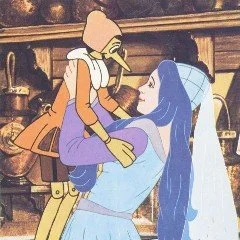
In the original story of Pinocchio, the Blue Fairy is the one who brings transformation. Actually, in the original story she was called the Fairy with Turquoise Hair for obvious reasons, but the Disney version just gave her a blue dress.
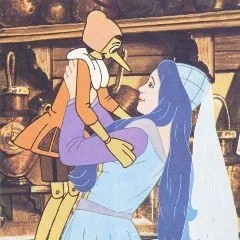
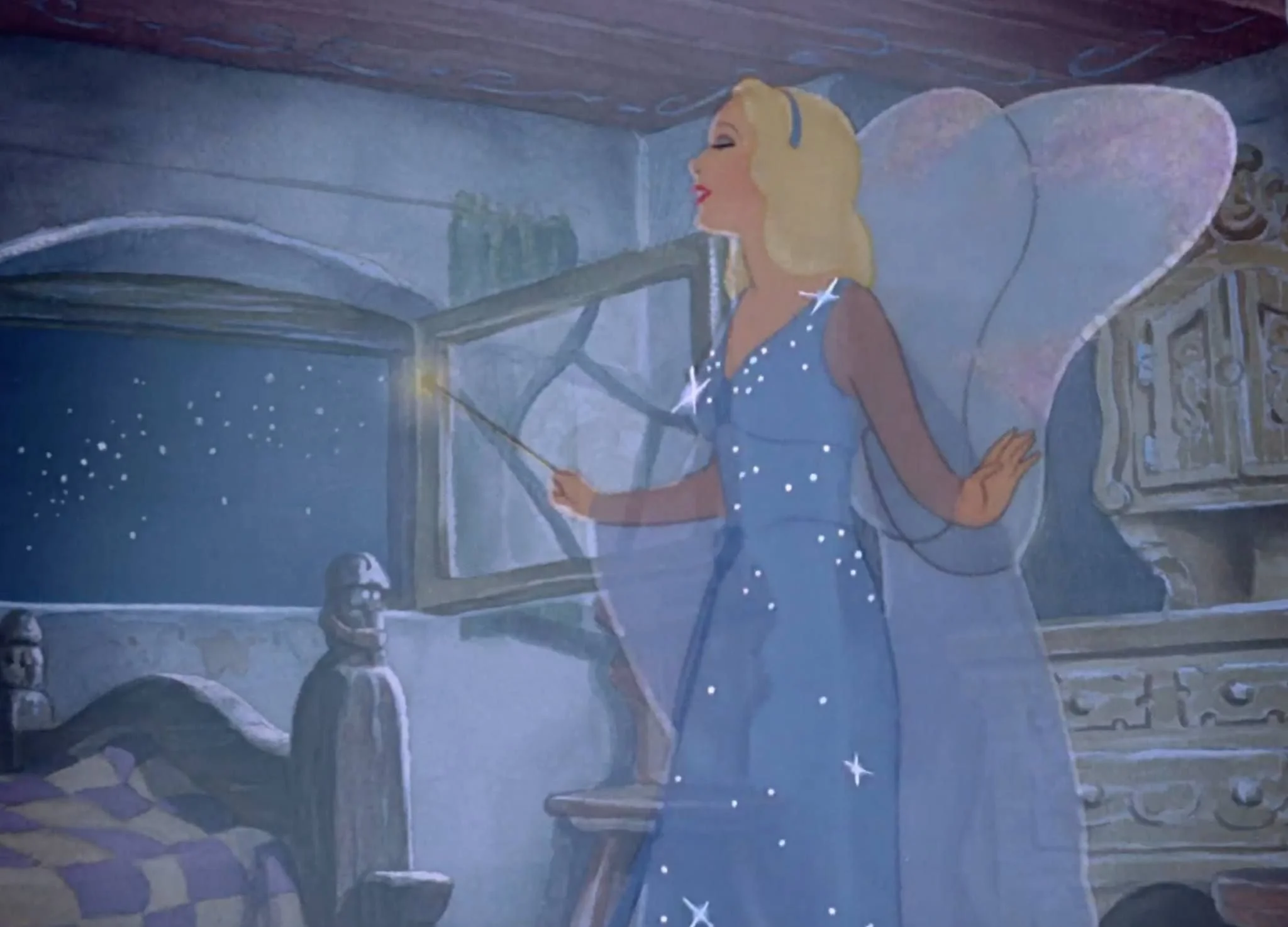
A downgrade, in my opinion. Who doesn’t want a fairy with turquoise hair in their corner?
A tangent for another day.
More importantly, every time Pinocchio encountered La Fata dei Capelli Turchini, he became something new or was turned from an unfortunate metamorphosis. For example, when he’s near death she offers him life-saving medicine, which causes nose growth when he lies. When it inevitably does, she summons woodpeckers to get his nose back down to size.
Like most fairy encounters, the results can be mixed.
The only constant with this particular fairy is that she means change is coming. This is no different. I am working on quite a few new writing projects and decided to make it even more hectic by updating my website and blog.
From now on you can find The Fairytale Feminista and Books by I.L. Cruz in one place. I hope all my readers follow me on this new adventure with brand new posts, exciting, original stories and a monthly newsletter for subscribers!
See you there!
A Fairy Godmother's Inner Life
When I first saw the Disney version of Cinderella, I was more interested in the Fairy Godmother than the girl who called her.
Let me quickly say, I have nothing against Cinderella. I know there’s a strong campaign out there against fairy tales in general because the romances are problematic. I think of them as more allegorical instead of aspirational. It’s how I’ve been able to write a blog called Fairytale Feminista without feeling my feminism is in any way questionable.
When I first saw the Disney version of Cinderella, I was more interested in the Fairy Godmother than the girl who called her.
Let me quickly say, I have nothing against Cinderella. I know there’s a strong campaign out there against fairy tales in general because the romances are problematic. I think of them as more allegorical instead of aspirational. It’s how I’ve been able to write a blog called Fairytale Feminista without feeling my feminism is in any way questionable.
To return to the purpose of this post, I wanted to know what happened to the Fairy Godmother (I’m capitalizing her title because she didn’t have a name) after she sent Cinderella off to the ball. Or what about the three fairies that kept Aurora, the Sleeping Beauty, safe in the forest for all those years? Or the old man in the Golden Goose, for that matter, who told the Simpleton where to find his prize?
Photo by Cibele Bergamim on Pexels.com
We never learn more about the helpers in fairy tales. Whether the stories give them credit or not, the helpers are the reason many protagonists are able to realize their dreams. And yet we see them come into the story and just as quickly retreat from it. Movies and books seem obsessed with the inner workings of the villain. Where’s the interest in the secondary or tertiary characters who move the story?
Who would you like to see from fairy tales turned into a story? Are there any you can recommend?
In the meantime, they say you should write the book you think is missing from the shelves. Stay tuned!
Advent Story Train
Welcome to the Advent Calendar Story Train, where you can read through 24 stories under this year's theme, Lost.
Blind Snow
He shuffled the deck of cards and pushed it across the table. A line of rime followed in its path sparkling in the low lamplight. His resemblance to the Claus was remarkable. Same twinkle in his eye, same flush of scarlet in his cheeks. The only difference was the chin. Where the Claus had a full beard of tumbling curls, his cousin, Frost, was clean-shaven. The cut of his jawline as sharp as his name.
Welcome to the Advent Calendar Story Train, where you can read through 24 stories under this year's theme, Lost.
Blind Snow
He shuffled the deck of cards and pushed it across the table. A line of rime followed in its path sparkling in the low lamplight. His resemblance to the Claus was remarkable. Same twinkle in his eye, same flush of scarlet in his cheeks. The only difference was the chin. Where the Claus had a full beard of tumbling curls, his cousin, Frost, was clean-shaven. The cut of his jawline as sharp as his name.
“Deal,” he said, his eyes a dare.
“One more hand,” Sanna agreed. Outside, a drunk was slurring his way through Silent Night. Badly. Jagged ice crystals reached across the windowpanes, obscuring the singer. She nodded. Another game was at least a way to pass the time. More importantly, it was a way to keep her nerve with the Snow King.
Sanna distributed the cards slowly, her eyes fixed to the pattern on their back. Initially, she hadn’t noticed the picture was falling snowflakes on an ashen field. As she sped up, the flakes appeared to move. After she handed out the sixth card for each of them, she rubbed the tips of her fingers, oddly numb.
“What are the stakes?” asked Frost, casually. Too casually. Sanna looked up, her eyes narrowed. He hadn’t picked up his cards yet. The air around him seemed to shift, shimmer. “Or it can be a friendly game.”
“I didn’t know you played friendly games,” she replied, stiffly. Her feet were cold. She’d discarded strappy heels hours ago in favor of bare feet on the hardwood. The human world was no place for a workshop elf. The footwear alone was enough to drive her to their current deal. They were red, a festive shade for the season and matched the cocktail dress with the distinct insignia that had gotten her spotted by Frost in the first place.
A calculated risk.
He picked up his cards and spread them his hand. She did the same, a snapping sound issuing from them like a lady’s fan unfurled on a hot day. Frost winced at the sound. It gave Sanna perverse pleasure to make him uncomfortable. She chuckled. Frost’s eyes narrowed in response, but he covered the slip by scanning the cards in his hand.
“Let’s say, a prize,” he replied, eyes still on his cards.
“What kind of prize? I already promised you five seasons at the ice factory just to make my plea,” she bit out. Not that she’d known the price.
“Blind Snow,” he said, amusement teasing the corners of his lips. She frowned and put the cards down, sharply.
“Spell it out. I’ve recently learned I prefer to know the terms before I commit to anything,” she said, hot tears threatening. Her choice had been made a year ago when she’d gotten lost during the Christmas run. When she’d missed the final call for the sleigh. And now she sat across from the only being who could contact the Claus and make him aware of her plight.
He sighed and lowered his cards as though setting down a heavy burden. The temperature of the room dipped dramatically, causing Sanna to shiver.
“That’s not how Blind Snow works,” he began. Sanna crossed her arms. “Winner gets an unnamed favor. Nothing untoward or against the laws of our realm. Nothing outside our ability to bestow.” The twinkle in his eye took on a roguish gleam. It wasn’t unattractive. Under different circumstances she may have given in to the unexpected flutter in her stomach. But she knew the rumors. It was well known that the Snow King only searched for lovers in the human realm. They came willingly—eagerly even—but never lasted long in a world made of ice. Then they returned never to be bothered again. Unless they called for him with the insignia she’d embroidered, discreetly, on her dress. Once he’d realized she was an elf needing his help, his interest had cooled, and the deal had been struck. A deal she hadn’t realized she’d made.
Sanna looked at the clock. A pale imitation to what they made at the workshop. Everything here seemed pale compared to the Northern Realms. The metal hands moved silently, but she felt the tick of every second beneath her skin. Unlike his cousin, the Claus could only come once a year. She was running out of time and the thought of another year lost in this world made her heart ache. Here, it was cold in a way that it never was at home. She had to get back.
11:45 pm
“So, no asking to take your throne?” she asked, flippantly.
“You can try.” He said it and she thought she glimpsed the words in the curls of his icy breath. That one breath held ache and hope and something else. It reflected every exhale of her lost year.
Not just lost. Trapped.
It never occurred to Sanna that Frost, the Snow King, felt just as lost and trapped as she did here as he did in his cold kingdom. Why else would he seek out humans that burned with the warmth of a sun that bit harder than the gnawing chill? She didn’t want to agree, but she wasn’t unmoved by the slip of his cool façade. Almost. Almost, she reached out and touched his hand, said she understood.
Almost.
Instead, she swallowed back her absolution and reshuffled the remaining cards in the deck reinserting the emperors.
“Blind Snow,” she said as the cards thrummed through her deft fingers. She slammed the pile down and smiled a predatory smile when he jumped in his seat. No matter what, she was going home.
They played in silence; Sanna because she had nothing to say and Frost because he didn’t want to miss a trick. They both knew that she was the superior player, but he had inhuman luck.
She kept her face passive and Frost did the same. She split her glances between her hand, which contained the possibility of two high snowfalls and his eyes, now a turbulent blue.
Outside, the drunk’s song had switched to Here Comes Santa Claus and Sanna wondered if he was part of a taunt. With his hiccups and slurring, the song sounded minor. The wind picked up outside, the windowpanes shook.
11:55 pm
“He’s early,” she said, a seed of hope blooming in her chest. Frost nodded, eyes still on the cards. Lights flickered. He pulled a card from the deck.
An emperor card. Diamonds, glittering like snowfall. Appropriate. He’d won. He always did. No one gambled like someone who had nothing to lose.
Seconds later, the Claus descended the chimney.
He was dressed for the sleigh. She couldn’t help the bittersweet smile.
Lousy timing.
Already she felt the nip of Frost as he rose from his seat. The Claus frowned in his direction.
A locket in the shape of a snowflake dangled from Frost’s fingers. When he placed it over her head the sudden chill momentarily stole her breath. She knew it had been captured in the locket. Her pledge. For what, she still didn’t know. He bent and placed a kiss on her cheek, the warmth of his lips startling.
“Congratulations,” said the Claus, but more as a question. A silent communication passed between the cousins, leaving Sanna lost in the exchange.
“Thank you, cousin,” Frost replied. “I believe you already know my new queen.”
Sanna grabbed the deck and held them tight. Blind Snow, indeed.
For now, she thought.
Thank you for reading today’s story. The next story will be available to read sometime on the 24th December, titled “Missing In Action". This link will be active tomorrow when the post goes live.
If you missed yesterday’s you can go and read it here.
Inspired to Fairy Tale
Once upon a time there was a box. Within it was contained all the stories of the world. Stories of grit to stir the soul. Stories of ardor to touch the heart. Stories of humor to lighten the load. Stories of tension to quicken the pulse. But the box contained more than just stories.
Once upon a time there was a box. Within it was contained all the stories of the world. Stories of grit to stir the soul. Stories of ardor to touch the heart. Stories of humor to lighten the load. Stories of tension to quicken the pulse. But the box contained more than just stories.
It also contained secrets that inspired creativity and frustration. And sometimes, without warning, the stories disappeared.
Okay, that was my oblique way of describing TV or more specifically, TV shows that end on a cliffhanger and never come back. We’ve all had shows we invested in—let’s call one Pushing Daisies—and one day it just wasn’t there anymore. To be fair, it was after the first writers’ strike and a lot of shows vanished. However, that happens more and more lately. It’s almost like a plot point for a fairy tale.
One day an intrepid woman, maddened by the loss of yet another story found herself drawn to a wonderous thing—a blank notebook. With the lost story still humming in her head, she opened it and, armed with a pen, began to write. With her chosen weapons, she conjured fully formed beings and worlds well-trodden and newly discovered. The power of her imagination was able to do the impossible. She brought the stories back.
The moral of the story is fairy tales come from everywhere and anywhere. When you can’t find one—make one.
A Borrowed Gift
Welcome to the Advent Calendar Story Train, where you can read through 24 stories under the theme Surprise.
The fairy who cursed Siduenya was diabolical. Not only was Siduenya barred from using her magic for her own ends, but the curse could only be reversed by someone who did something for Siduenya without being asked or feeling obligated.
Welcome to the Advent Calendar Story Train, where you can read through 24 stories under the theme Surprise.
The fairy who cursed Siduenya was diabolical. Not only was Siduenya barred from using her magic for her own ends, but the curse could only be reversed by someone who did something for Siduenya without being asked or feeling obligated.
If that ever happened, Siduenya would lose her magic forever because her “savior” would get her magic.
Siduenya figured that was the price for pissing off an edict fairy. They used their magic to infuse natural law. It was the silliest waste of magic she’d ever heard. If laws are natural, why do they need magical assistance? But the point was moot—Siduenya was stuck with a curse that she neither wanted nor wanted lifted. Now that same fairy taught curse lore at the Lyceum.
All of this rattled around in Siduenya’s head the morning Violeta knocked on her door. She had to give the girl credit—Siduenya had the most forbidding door she could devise. It was painted a gruesome red reminiscent of blood and looked perpetually moist. The knocker was a human skull with preserved eyes and a few strands of hair still clinging to the scalp. Its loosened jaw had to be moved to knock to avoid touching the menacing door. Violeta overcame what most people avoided in order to speak to Siduenya.
Violeta entered the house with brisk efficiency. Siduenya laughed aloud when she saw Violeta’s reaction to the sumptuous surroundings that greeted her.
“Were you expecting a torture chamber?” asked Siduenya.
“Frankly, yes,” replied Violeta, her voice high and reedy.
Siduenya gave her an appraising look. Violeta’s clothes were well-made, and her mud-spattered boots were functional rather than fashionable. Definitely Lyceum.
“And you came anyway? Desperate or brownnoser?” asked Siduenya. Her smile was out of practice and Violeta recoiled at Siduenya’s attempts.
“It’s not what I want—it’s what you want. I’m here to help,” said Violeta, holding out her hand to shake.
Siduenya threw her hands up in frustration and said rude words under her breath.
“Leave. I am not in the mood for one of Ametrine’s pets,” said Siduenya, shooing Violeta toward the door. A few years after Ametrine cast her curse, she started sending her most promising students to Siduenya to lift it as an extra credit assignment. At first, it was laughable and Siduenya indulged the students’ feeble attempts to break the unbreakable curse. But several decades later, it had ceased to be cute and became a constant reminder of what she’d lost. It’s what led to her using inventive door décor.
Violeta sidestepped Siduenya’s attempts to eject her.
“I know you don’t want the curse broken. Nobody wants to lose their magic. And you can’t use it for yourself. You’re like a genie without a lamp. What if I could change that?”
“You already lost, kid. Anything you do now is colored by obligation to your teacher or by my implicit desire, which may as well be a request. Now if you don’t mind—”
“You’re wrong. You don’t want the curse and you don’t want to lose your magic therefore negating your request. I have no obligations, which makes me a neutral party. So, I ask you, what’s the answer worth?”
Siduenya frowned. Violeta certainly had a new take on her predicament, but she sounded like one of those damned edict fairies with her “negating this” and “neutral party” that.
Was it possible? Siduenya saw the curse like a room with no doors, but maybe it was more like a jigsaw puzzle. Did Violeta have the missing piece? What wouldn’t Siduenya pay to get the answer? She saw warning signs everywhere, and deliberately tamped down her enthusiasm.
“The real question is—what’s it worth to you?” asked Siduenya. She offered Violeta a seat, who took it, gratefully. The walk to Siduenya’s house was neither short nor easy.
“I’m under a curse. I want it lifted and I need you,” said Violeta.
“Only the person who put the curse on you can lift it—trust me, I know,” muttered Siduenya.
“Actually, only the object of the curse can lift the curse, so I know this will work,” replied Violeta. “You lift my curse and it’ll lift yours.”
“None of this makes sense. I can’t lift curses. If I could, I would have lifted my own years ago.”
“Maybe. Tell me—is there anything about Ametrine you like?” asked Violeta.
“No! She ruined my life. If your idea is ‘forgiveness’, you’re wasting my time,” Siduenya yelled. Her small hope was shrinking. She stood, ready to throw Violeta out, forcibly, if necessary.
“No. That wouldn’t work,” Violeta said, quickly. “Ametrine must be cursed with your magic in order to lift my curse and then I can lift yours without your powers being lost.”
“What?” asked Siduenya, puzzled by the double-talk.
“I have the exact wording written down.” Violeta removed a slip of paper from her pocket.
Siduenya snatched the paper. What she read was not a curse, but a transfer spell. It seeped into her fingers, spreading throughout her body.
“What have you done?” Siduenya pulled Violeta from the chair, pushing her toward the door. But it was already too late—the paper had been enchanted. Her powers were leaving her.
“I need to borrow your magic. It’s the only way. My curse can only be lifted with borrowed magic,” she said, escaping Siduenya’s grasp.
Violeta erected an invisible wall blocking a powerless Siduenya out. Infused with the older bruja’s magic, Violeta began her spell.
“I curse you, Ametrine, with stolen magic, for someone to take your magic until it is freely returned,” she said, her voice reverberating. Siduenya didn’t doubt the echo made it all the way to the Lyceum. The walls of Siduenya’s house thrummed. With the last word spoken, Violeta disappeared.
Siduenya howled, bereft of her magic. Her anger shook the walls and cracked the ceiling. When the torrent passed, Siduenya surveyed the wreckage and gasped. She realized she’d done it with magic. But not her own.
Fairy magic.
Suddenly, she knew what Violeta had done. A slow smile crept across her face. Perhaps it was time for Siduenya to take a class at the Lyceum.

Thank you for reading today’s story. The next one will be available to read on December 11th, titled “Motherhood". This link will be active tomorrow when the post goes live.
If you missed yesterday’s you can go and read it here.
Lives in Hyperbole
In real life, Cinderella would have slipped laxatives into her stepmother and step sisters’ morning tea or packed a bag for the next village. The youngest son in The Golden Goose would have refused to go chopped wood after his two older brothers had maimed themselves. Sleeping Beauty would have heard gossip which invariably went around the castle to find out why no one sowed. The brave little tailor would have killed the flies and then saved it as a fun story the next time he went to the tavern. The Three Little Pigs (putting aside anthropomorphized pigs) would have lived together in a brick house they could have built in half the time and avoided the wolf.
In real life, Cinderella would have slipped laxatives into her stepmother and step sisters’ morning tea or packed a bag for the next village. The youngest son in The Golden Goose would have refused to go chopped wood after his two older brothers had maimed themselves. Sleeping Beauty would have heard gossip which invariably went around the castle to find out why no one sowed. The brave little tailor would have killed the flies and then saved it as a fun story the next time he went to the tavern. The Three Little Pigs (putting aside anthropomorphized pigs) would have lived together in a brick house they could have built in half the time and avoided the wolf.
None of that happened because fairy tales live in hyperbole. Maidens aren’t pretty, they are rare jewels. Boys aren’t just resourceful, they luck into whole new lives. Queens are evil or destined to die (or both). Kings give away their daughters to anyone who can solve a riddle or kill a giant. And I accept that in fairy tales because the format is short story, and it must convey its message in a clear and concise way. Archetypes are helpful in short stories.

Lately I’ve been abandoning books that employ archetypes. While I’m fine with Cinderella having a martyr complex for most of the story knowing she’ll get out of her situation, I am less tolerant of novel-length stories about martyrs who constantly make themselves smaller and artificially unobtrusive. I know why the youngest son (the simpleton) had to go and chop wood, but if a story revolves around a protag that falls into danger every time he leaves the house, I’m annoyed. Keeping the secret of Sleeping Beauty’s (the innocent) calamitous christening is a major plot point, but if not sharing a vital piece of information continually causes problems in a book, I become frustrated.
I think I accept archetypes in short stories because I don’t expect characters to grow or have a real arc. That isn’t true in full-length novels, especially a series. I’ve abandoned books and TV shows for just that reason. Fairy tales need a short hand to convey ideas that just doesn’t work in longer stories.
Are there plots or characters you can only enjoy in the short term?
Advent Train Stories: The Words
Welcome to the Advent Calendar Story Train, where you can read through 24 stories under the theme The Gift. Thank you for reading today's story. The next one will be available to read on December 7th, titled "The Gift". The link will be active tomorrow when the post goes live.
If you missed yesterday's you can go and read it here.
Welcome to the Advent Calendar Story Train, where you can read through 24 stories under the theme The Gift. Thank you for reading today's story. The next one will be available to read on December 7th, titled "The Gift". The link will be active tomorrow when the post goes live.
If you missed yesterday's you can go and read it here.
This year I am excited to participate in a fun group activity for the holidays--a flash fiction advent train! I hope you'll check out all the submissions and will join me in looking forward to "opening" one story each day. Here is my story:
The Words
Pilar walked the aisles of the ancient library. Her footsteps echoed in the empty chamber as she ran her fingers over the shelves where once stood countless tomes and scrolls. Everywhere she looked was dull and gray, just as it was outside. She was told that in the before times there were periods of light and dark with subtle changes in between the two as the day wore on. Those who were observant could tell the time by the gradations. Now all was flat, and people wandered in a careless stupor stopping to rest when their bodies tired and waking when they grew weary of the inertia.
But Pilar also knew there was a way to bring the color back—to wake them all from the miasma—and it was in this building.
“May I help you?” a voice, cracked and rough from disuse startled Pilar out of her thoughts. She spun around quickly and saw a small gray-haired woman bent double with a plain walking stick in her right hand. The woman smiled with a toothless grin, but her eyes looked past Pilar, sightless.
“I don’t know,” began Pilar. “I’m looking for …” her voice trailed off. Pilar wasn’t sure if she couldn’t finish the sentence because it felt insensitive to ask a blind old woman to help her look for anything or if voicing the idea that she alone knew how to fix what had damaged their land sounded foolish. The woman’s smile deepened.
“You seek the secret?” You’re not the first,” she said and turned away. She beckoned Pilar with her cane and walked with purpose to a small table with a chair on either side. On the table was a notebook and a pen. The woman sat down, but before Pilar could do likewise the woman said, “Stand in the middle of the room and close your eyes.”
Pilar would have objected, but instead did as she was told.
“In order to know the secret, you must know what we were before the words left us,” said the woman. “Once, this building, with its vaulted ceilings and rows of aisles contained the vast knowledge of the ages. Books handed down from the centuries of experience and imagination. The paper came from plants and animals from land and sea. The ink was derived from hundreds of sources in a multitude of colors. And the covers touched so many hands they came to contain the full sweep of humanity.”
As the woman spun her tale, Pilar saw the library as it was, felt the weight of its knowledge, smelled the books, scrolls, and life that had inhabited it. Centuries passed like moments and all of it was in vivid color. Pilar’s eyes filled with tears at the images that flitted behind her closed lids.
“Then little by little, people stopped coming. Knowledge was abandoned and slowly, the words left us.” The images behind Pilar’s eyes changed and became the world she knew now—colorless—and she cried anew.
“Open your eyes,” said the woman and she gestured Pilar closer. “The secret is this pen and this notebook.”
“What? How?” Pilar asked, incredulously. She’d been expecting a champion or a magic spell, something more than pen and paper. She was glad the woman couldn’t see because she knew her face would give away her doubts.
“I know what you’re thinking. You think it’s not enough and I’m just a foolish old woman. But you’d be surprised. Words are a gift that give color to the world. Write down what you’ve seen today and everyday then put it on a shelf. It’ll save us,” said the old woman, smiling. She picked up the pen and notebook and held them out to Pilar, who took them as a reflex. She’d known this quest had been a long shot, but she couldn’t help the crush of disappointment that surged through her. She wanted to leave as quickly as possible, and she did so without another word.
It was with a heavy heart that Pilar crossed the threshold back into the outside world. She didn’t know why she still clutched the pen and notebook so tightly, but also couldn’t bring herself to throw them away. What had she expected? A miracle, she supposed. She walked down the marble steps as an older man was walking up. In his hand was a pen and a notebook, well-worn and straining with pages. After a moment’s hesitation, she followed him, at a distance.
The man entered the library and greeted the old woman as a friend would before handing her his notebook. From behind one of the aisles, Pilar watched as she pointedly walked back and forth between many aisles and then finally stopped in front of one that looked like all the others to Pilar. The old woman bent over with assistance from her cane and the man and placed the notebook on the shelf. In a matter of moments tendrils of color flowed out of the book. The muted colors of the library became sharper, brighter and Pilar couldn’t help but gasp at the change.
Unerringly, the old woman trained her sights on Pilar and smiled.
“Now you know, so don’t waste time,” she implored.
***
Years later when Pilar returned with her own notebook brimming with thoughts and ideas, she remembered what the guardian of the ancient library told her.
“Words are a gift that give color to the world.”

Finding A Name
One of my favorite fairy tales is Alice’s Adventures in Wonderland and its subsequent Through the Looking-Glass and What Alice Found There. When I was a girl, I read the book and watched almost every version on TV and in the movies. I didn’t realize it then, but Alice’s escapades began my own quest to find stories of female adventure. Considering they were written in 1865 and 1871, respectively, I’d consider them some of the earliest forms of feminist fairy tales.
One of my favorite fairy tales is Alice’s Adventures in Wonderland and its subsequent Through the Looking-Glass and What Alice Found There. When I was a girl, I read the book and watched almost every version on TV and in the movies. I didn’t realize it then, but Alice’s escapades began my own quest to find stories of female adventure. Considering they were written in 1865 and 1871, respectively, I’d consider them some of the earliest forms of feminist fairy tales.

Then again, there is her red-caped sister in adventuring, Red Riding Hood. My feelings about Red have run the gamut. Sometimes I think of her as a neglected child—who sends their little girl into a wolf-infested forest to bring food to an elderly woman? Maybe it’s the Latina in me, but shouldn’t Abuela have moved in with the family already? Other times I think of Red as a hapless girl talking to strangers and too ignorant to recognize that her granny has been replaced by a furry predator.
But in my quiet moments I wonder if she isn’t a bit of a rebel. She’s sent to the woods and wanders from the path. She converses with a dangerous stranger. And when confronted with an obvious fake grandmother, it almost seems like she’s flirting with her ridiculous questions. If Little Red Riding Hood had been written today, she’d be a badass! Maybe being eaten was a calculated risk in order to find her grandmother. I’d read that story.

My point is, we (myself included) spend a lot of time talking about fairy tales that feature women and girls who seem to lack agency, but there are plenty of interesting fairy tale characters who also fueled my love of women adventurers. It was what gave my blog its name.
The List
Romantic comedies (and any romance genre for that matter) are our modern-day equivalent of fairy tales. At least the “girl-finds-a-prince or the boy-is-given-a-princess-type” fairy tale. It has a discernable formula—two people meet, they fall in love, an obstacle separates them (and according to Hallmark movies, that’s at the hour and thirty mark), and then all hurts are mended to a happily ever after conclusion—and often used devices. One of the most used is the List.
Romantic comedies (and any romance genre for that matter) are our modern-day equivalent of fairy tales. At least the “girl-finds-a-prince or the boy-is-given-a-princess-type” fairy tale. It has a discernable formula—two people meet, they fall in love, an obstacle separates them (and according to Hallmark movies, that’s at the hour and thirty mark), and then all hurts are mended to a happily ever after conclusion—and often used devices. One of the most used is the List.
You know what I’m talking about.
My first conscious awareness of it was as a kid watching When Harry Met Sally
One character, typically the guy, but I’ve seen some good lady lists too, enumerates all the reasons they can’t picture life without the other one. The one with the list always seems angry and frustrated to have to relate the list. The profess-ee stands, usually with tear-brightened eyes, in bewilderment. I’ve seen this done well and…not so well. Even so, I think it’s something that is glaringly absent from more traditional fairy tales.

Prince to Cinderella
“I think it’s adorable that cleaning products make you twitchy and you insist on going around barefoot.”
Prince Charming to Snow White
“No one eats apple pie quite like you.”
Prince to Rapunzel
“I love how grounded you are even though you live in a tower.”
If you’re thinking those aren’t really lists, you’re right. I think it’s what keeps the romance out of fairy tales. Relationships are transactional and haphazard. It's like marrying the firefighter who rescued you from a burning building when thanks (albeit profound) and maybe baked goods would do the trick. I suspect if either party were pressed for specifics about why they were together, the reasons would be unsatisfying.
Why do I bring this up? I suppose the breezy offerings at this time of year for books, movies, television and even music. Some tropes are admittedly overused, but some are as welcome as a cool breeze on a summer day. And it led me to wonder, where do fairy tales fit in? My conclusion: they don’t—at least not in a way that makes me want to use them as a romantic ideal.
Adult Rant
Maybe it’s the mom of a teenager talking, but I’m really tired of protagonists with lousy impulse control. It might also be the reason I’ve been actively seeking out books with adults. When I think about it Chosen One children or <gasp> teens would be a nightmare. Despite knowing nothing and adults actively trying to help them they have a psychotic need to “go it alone” or “try things out: at night, usually in a forest or a creepy basement.
Maybe it’s the mom of a teenager talking, but I’m really tired of protagonists with lousy impulse control. It might also be the reason I’ve been actively seeking out books with adults. When I think about it Chosen One children or <gasp> teens would be a nightmare. Despite knowing nothing and adults actively trying to help them they have a psychotic need to “go it alone” or “try things out: at night, usually in a forest or a creepy basement.

I understand the appeal, especially in speculative fiction. Powers have become a short-hand for hormones just as monstrousness or shifting has for puberty. I get it—lots of changes! But at the risk of sounding old—GET OVER IT. Too often it gives the protagonist carte blanche to treat everyone abominably after which the protag is forgiven in time to fix the mess mostly made by the protag.
For all I know fairy tale characters could have become just as tedious in the same way given the depth and breadth of a novel-length story. There is potential.
Jack’s larcenous proclivities could be the medieval equivalent of a teenage joyride in a stolen car.
Red Riding Hood’s deviation from the path, a stand-in for teen rebellion.
The boy in the Snow Queen who was infected by the evil mirror shards and ran away, analogous to runaways and drug use.
Still, I feel the need to rant. But maybe it’s just me. I know there’s a ton of people who love the snarky teen, whose only redeeming feature is saving the world. For me, it’s not enough. Do I ask for too much? Maybe.
But I’m a grown-ass adult.
To Warn or Not to Warn
To Warn or Not to Warn...that is the question.
One of the reasons we read fairy tales is to be transported in a predictable way. Yes, it’s all fantastical, but there are big neon sign type clues that tell you it’s coming. If you save a golden fish in a lake, you better believe it’s going to get you wishes. If a fairy godmother comes with a dress for the ball, you’re going to catch a prince’s eye. And if some rando takes your broken-down old cow and gives you beans, your garden is not getting basic wildflowers.
To Warn or Not to Warn...that is the question.
One of the reasons we read fairy tales is to be transported in a predictable way. Yes, it’s all fantastical, but there are big neon sign type clues that tell you it’s coming. If you save a golden fish in a lake, you better believe it’s going to get you wishes. If a fairy godmother comes with a dress for the ball, you’re going to catch a prince’s eye. And if some rando takes your broken-down old cow and gives you beans, your garden is not getting basic wildflowers.
But would you want to know that the story contains economic hardship, foot mutilation or the dismemberment of a giant? Does it effect the experience? Admittedly fairy tales are rarely read once, so you already know what you’re getting by the first reread. I call that the Shakespeare clause. You don’t read Shakespeare for the ending—he lays that out at the beginning—you read it for the language and the twists of the plot. Unless it’s the histories, and then you already know what’s coming.
What if all you want is some surprise twists and turns? This is the Shyamalan clause. Once you know the ending, is there any point to watching the movie again? Maybe or maybe not.

This is all a long way of working out my feelings for book blurbs that tell the reader what to expect from the book explicitly. I don’t mean the “Will she save the world or lose her life?” descriptions. I mean the warnings. Lately I’ve seen a lot of addenda stating how steamy the romance will be or giving trigger warnings about violent acts. Is it really fair for the author to have to give these kinds of descriptions for a potential reader? In the case of the trigger warning, I can see the desire to warn, but as to the heat levels for the romance—that feels like you don’t want to waste a reader’s time. And I think that’s where I struggle. Part of the reading experience is wasting time. After you finish school, any reading you choose to do is just that, a choice. I know we’re all super busy, but even the book I relegated to the DNF (did not finish) pile taught me something about my likes and dislikes. You look at the cover art, you read the back blurb, you skim the first few pages and then you take a chance. It’s relatively low risk, so why not leap? Reading is literally (and literarily) a pastime.
Jack didn’t hesitate at the bottom of that beanstalk, he just climbed.
As I said earlier, I’m on the fence. Blurbs can be misleading and then as a reader you feel cheated. I’m also the person who hates watching the Netflix trailers that give away the entire story and then I don’t watch because, why bother?
How about you? Do you want to know exactly what you’re getting when you open a book or is part of the adventure finding out as you go?
Running Through the Forest with Disney
As anyone who likes fairy tales knows, it is impossible to ignore the outsized influence of Disney. Many of the stories we think of as universal are really our collective watching of movies made by The Mouse. I personally have no problem with this because I love a good fairy tale re-telling (although I admit some are not that good) and my favorite is Robin Hood.
As anyone who likes fairy tales knows, it is impossible to ignore the outsized influence of Disney. Many of the stories we think of as universal are really our collective watching of movies made by The Mouse. I personally have no problem with this because I love a good fairy tale re-telling (although I admit some are not that good) and my favorite is Robin Hood.

I know what you’re thinking. Robin Hood is not a fairy tale. Well, you’re right. It’s a legend, which I like to think of as an older fairy tale. There is no magic, but the Disney version created whimsy by making all the characters animals. I think it’s an inspired touch that they made Robin a fox because of their popularity in fairy tales and fables as clever. My idea of an ideal guerilla army would have a fox at its head (not a mixed metaphor!), but that’s another post.
It was my first animated crush and my first love story. Robin Hood was dashing, brave and pined for Maid Marian, who he’d known since childhood. I didn’t care that the accents were all over the place (why was Allen-a-Dale a Texan, Friar Tuck and Little John from the Midwest, various characters from the American South and only Robin, Marian, Prince John, and Hiss from England?) or that the music was decidedly 70s folk. I just loved the pageantry, the adventure and the love story. And of course Lady Kluck, who was my secret hero and gave me hope that woman (even a chicken) can fight their own battles in a story.
I also attribute Disney’s Robin Hood for starting my interest in history, Anglophilia, and stories in general. All my favorite things came together in one animated package. I’m not even ashamed to admit that on nights I can’t sleep I often quote the entire movie and play it in my head from beginning to end! I saw other live action versions, but none compared to that first experience.
I’m not entirely sure why I wrote this post other than to say that when the world seems crazy and truly horrible things are happening, it’s hard to imagine that something as trivial as fairy tales are important. Stories matter. Taking walks through the forest, real or metaphorical, can lead to the unexpected—escapism or maybe a calling.
Did a story ever steer you toward something? A life choice? A career? A life-long love affair?
A Winter's Story, part III: Book Divining Edition
Writers get inspiration from anywhere and everywhere, especially when they’re blocked creatively. Part III of my 100-words serial was elusive, which I hoped wasn’t an omen for edits in my third novel (currently underway). I remembered reading somewhere that there are psychics who pick a book at random, flip through, and point to a sentence to determine a reading.
Writers get inspiration from anywhere and everywhere, especially when they’re blocked creatively. Part III of my 100-words serial was elusive, which I hoped wasn’t an omen for edits in my third novel (currently underway). I remembered reading somewhere that there are psychics who pick a book at random, flip through, and point to a sentence to determine a reading.
Recently I bought a book of defunct English words—because words are one of the many things I geek out over—and decided it was the perfect book for my purpose. It had words like sandillions, drizzen, and idle-worms (post for another day). I flipped through the book with my eyes closed and then pointed at
Ostentiferous: adj. that which brings monsters or strange sights.

I love lightbulb moments! Here’s what my newly-learned word inspired:
Winter’s Story, part III
The woman’s gaze careened between the lamp and the large-eyed sprite. At length her eyes settled squarely on the girl.
“It’s an ostentiferosity light,” she said matter-of-factly. At the stricken woman’s blank stare the sprite continued. “It summons the fantastical.”
“Then why are my treasures gone?” asked the woman. The sprite cocked her head considering.
“They must not have been fantastical. But you’re still here,” she replied and a slow smile spread across the sprite’s face. The woman blanched at the sight.
“What does that mean? Where did my things go?”
“Shall we go and find out?” asked the sprite.
A Story for Winter
Somehow the end of the year is almost upon us. There are days I wonder where the time has gone and others when I can't wait to see the back of this year! I'm sure most of your can relate. The days are shorter (in the Northern Hemisphere) and despite every natural thing saying its time to hibernate, we're more busy than ever getting ready for the holidays.
Somehow the end of the year is almost upon us. There are days I wonder where the time has gone and others when I can't wait to see the back of this year! I'm sure most of your can relate. The days are shorter (in the Northern Hemisphere) and despite every natural thing saying its time to hibernate, we're more busy than ever getting ready for the holidays. For some of us that means traveling to family for the first time in over a year. I'd be lying if I said I was looking forward to the traffic and rest stops with too few restrooms and long lines at the food court and yet I'm glad I have the option to do so. It also feels like the best time of the year to sit around in the dark and tell ghost stories. Here's one:
A Winter Story
Once there was a woman who lived in a large, drafty house surrounded by things instead of people. There were things that walked and things that talked. She had things that sang and things that danced. There were even things that existed only to be admired. She rescued these things from the oblivion of the unwanted.
When the days grew shorter, and the night grew colder, the woman found a light in the shape of a star. She lovingly restored it to its former glory and on the shortest day of the year, she turned it on.

Bright light…
Part II in two weeks!
The Mushroom Fairy
My last post I focused on the magic that I found traveling on the west coast. A comment from one of my readers who lives in the west coast made me think about how there are times that we forget how magical our own backyards can be.
My last post I focused on the magic that I found traveling on the west coast. A comment from one of my readers who lives in the west coast made me think about how there are times that we forget how magical our own backyards can be.
When I moved to my house over ten years ago, I walked my daughter to and from preschool. She's older now and walks herself, but I still enjoy walking in my neighborhood. Most especially I love seeing mushrooms. At this time of year they crop up everywhere and I can't resist taking pictures of them. Mushrooms are magical in my opinion--the colors, the shapes, the sizes, the suddenness--all of it is amazing and though I'm not a poet, it inspired me.
The Mushroom Fairy
She sets to work in the dampness of dusk
Arms laden with magic, air heavy with earthy musk
Soft soil delights in fairy tending
Seedlings thrive and ivy wending
By dawn all spells have been cast and thrice chanted
Greens, golds and grays securely planted
What sprouts are spongy clouds, an enchanted playground
Where fairies play and dreams abound
Minding my Mythology, part I
I’ve mentioned once or twice that my superpower is research. It’s also my comfort zone and in these unsettling times, research is where I go to relax. Lately it’s been mythology. As a child, I devoured books about Greek and Egyptian mythology. And yet I never thought to search for my own.
I’ve mentioned once or twice that my superpower is research. It’s also my comfort zone and in these unsettling times, research is where I go to relax. Lately it’s been mythology. As a child, I devoured books about Greek and Egyptian mythology. And yet I never thought to search for my own. In a previous post, I mentioned the need to invite other pantheons to the table and I’m gratified to see Yoruba, Hindu, Korean, Mayan and many other mythologies are getting their day in the sun thanks to Rick Riordan.But I want to do my part, too. My research has led me to finally fulfill my 2014 promise in the post At the Crossroads of Fairy Tales and Folklore and learn more about my own mythology.The indigenous people of Puerto Rico (Borinquen) were the Tainos. They had a rich culture and an intricate mythos. Here’s one story:Yaya was the Original Spirit, imbued with both feminine and masculine energy. Being of both natures Yaya was able to conceive a son, Yayael. At first, Yayael was an obedient son, doing as Yaya told him. Yet as he grew, a rebellious streak grew with him. He was envious of his creator’s power and position and began to plan Yaya’s murder.![[photo of the Zemi stone]](http://www.hartford-hwp.com/Taino/photos/zemi.png) But Yaya was observant and sent Yayael away, hoping that it would change Yayael’s feelings. When Yayael returned, his feelings hadn’t changed, and Yaya had no choice but to kill Yayael. Suffering the loss of a son, Yaya collected Yayael’s bones and put them in a calabaza, a gourd, and hung them from the roof the house. Days passed and Yaya missed Yayael and they brought down the calabaza to look at their son's remains. To their astonishment, the calabaza was filled with water and the bones had become fish of all kinds. Yaya ate the fish, but there were always more. After eating their fill, Yaya put the calabaza back on top of the house……To be continued!
But Yaya was observant and sent Yayael away, hoping that it would change Yayael’s feelings. When Yayael returned, his feelings hadn’t changed, and Yaya had no choice but to kill Yayael. Suffering the loss of a son, Yaya collected Yayael’s bones and put them in a calabaza, a gourd, and hung them from the roof the house. Days passed and Yaya missed Yayael and they brought down the calabaza to look at their son's remains. To their astonishment, the calabaza was filled with water and the bones had become fish of all kinds. Yaya ate the fish, but there were always more. After eating their fill, Yaya put the calabaza back on top of the house……To be continued!
Not all those who wander...
When I was about eight, I watched Alice in Wonderland over and over again. I loved the chatty and catty flower garden. I memorized all the Cheshire Cat's lines. I hated the ending. I didn't want Alice to back to her old life. I hoped she would learn to navigate the ins and outs of Wonderland.
When I was about eight, I watched Alice in Wonderland over and over again. I loved the chatty and catty flower garden. I memorized all the Cheshire Cat's lines. I hated the ending. I didn't want Alice to back to her old life. I hoped she would learn to navigate the ins and outs of Wonderland. Later, I read Through the Looking Glass and learned that Alice became a queen--the first in my reading of fairy tales because most girls became princesses. But she still went back, discovering the whole episode was a dream.This morning, while searching my brain for a post topic, I thought about Alice and her adventures. And that led to other girls who attempt escapades and the outcomes.Firstly, they are never undertaken by choice. In the Wizard of Oz, Dorothy is conked on the head and awakens in Oz, all the time demanding to make it back home despite having wanted to run away with Toto before the tornado. Red Riding Hood was on an errand for her mother.Secondly, the girls always want to return home. Dorothy and Alice takes on unimaginable risks because they want to go home. No matter how much danger they face and overcome, they still want to get back to the worlds they knew.Lastly, and almost peripherally, they came from nice homes. These weren't the Cinderellas or the Snow Whites, who were mistreated. Maybe that's why they were in such a lather to get back home.Of course the comparison is when boys from fairy tales leave home and go on adventures. They seek fame, fortune and tend to get both and much more. They never return home and really don't want to return. Sometimes I'd watch Alice in Wonderland and wished she'd wandered a little longer.Until today, I didn't know who to attribute the "Not all those who wander are lost." I've learned it came from J.R.R. Tolkien and The Fellowship of the Ring. It got me thinking about the need to wander, if only for a change of scene. So maybe the saying could be, "Not all those who wander need return."
The Emperor's New?
I have a question for you at the end of my story.Once there was an emperor who ruled an empire. Except he didn't. He spent most of his time throwing parties and surrounded himself with men and women who flattered his vanity. But he saved his greatest passion for clothes--of all shades and for all seasons. Satins, silks, brocade and every costly fabric adorned his body at all times with multiple changes daily.One day a pair of con men arrived in the capital. They'd learned of the vain emperor and his penchant for clothes. They made it known that they were renowned tailors who only designed for the most fashionable and important. The emperor had his advisors bring the men to court and asked for samples of their work.The men were clever. They explained to the advisors that not only was their material the finest in the world, it was also magical. They claimed that only the most worthy could see it. They showed them pictures of nothing, but the advisors feared being called unworthy and instead praised the beautiful creations (and they were accustomed to praising inaction). The men were escorted into the throne room and gave the same account of their enchanted fabric. The emperor was just as reluctant as his advisors to admit he saw nothing. He promised bags of gold and jewels for a complete wardrobe.Weeks passed and the men appeared to work diligently, often into the night until the day of the unveiling. The emperor was overjoyed to hear they had completed the task and announced a parade to present his subjects with his new clothes. The "tailors" promised an opulent suit of clothes and the emperor dutifully oohed and aahed over clothes he couldn't see.The parade began and the emperor's subjects were perplexed by the emperor's appearance. He walked up and down streets with his head high, posing and twirling for the crowds. Finally he turned a corner and a young child seated on the shoulder's of her father and yelled, "The emperor isn't wearing any clothes!" The crowd was silent for a moment and then erupted in laughter. The emperor realized it was true, but for his pride, continued his procession. But the spell was broken. His advisors knew the truth and so did the people.In all the versions I've seen (and there are several from various countries), no one says what happens to the emperor. I like to think he realized the error of his ways and became a more worthy ruler.So here's my question. Do you ever hope that we're just two con men and a naked parade away from better leaders?Just wondering...
Fairy tale Endings and a Passel of Princesses
Fairy tales like drama, specifically uncertainty. They fixate on main characters who often are in situations most of us would consider cruel and unusual and then give them over to situations that sound better, but just as unsure. Why are they okay with this and more importantly, why are we?Last weekend I saw Ralph Breaks the Internet and it was great. My favorite part was (no spoilers) the princesses. They were fierce and capable, and it makes me wonder why they even needed princes. Is that unfair?I’ll admit that I’ve made cynical comments after reading the “happily ever after”, but honestly, what does that look like for someone who was treated as a scullery or a man who spent who knows how long living in a pond as a frog. What if Prince Charming fell in love with the next girl who had an enchanted wardrobe? Is it really too much of a stretch to assume the selfish princess was still an oath-breaking egoist even though the frog became a prince? But I want to be kind. Or at least understanding. Fairy tales were made to teach. What better lesson can anyone learn than always be prepared for the unknown? I think we’re quick to dismiss princesses and fairy tale endings. What if we looked at it in another way. Leaving one bad situation for the possibility of a better one is brave especially if that new situation is the unknown.
OOO October's Outta the Drawer Originals, part V--The Finale
October is almost over and with it's departure comes my last entry for OOO October's Outta the Drawer Originals. I hope it inspire at least one or two of you to unearth some old stories or come up with some new ones.My finale is inspired by my yearly Halloween costume--a night fairy. It's more a concept than a reality. I imagine them to be the fairies that are in charge of rules, even if fairy rules are different than our own.Siduenya


Never miss a new post
Subscribe to the Fairy Tale Feminista