I came to an odd and slightly disturbing realization the other day. I haven’t read any books written by men in years. This was not intentionally done. But it did get me thinking about the type of books I read and whether it’s become something niche. I read fantasy—all kinds, historical fiction, and mystery when I need something quick and dirty (that has nothing to do with spice levels, BTW). And yet for more than a few years, none of those books were written by men.
I came to an odd and slightly disturbing realization the other day. I haven’t read any books written by men in years. This was not intentionally done. But it did get me thinking about the type of books I read and whether it’s become something niche. I read fantasy—all kinds, historical fiction, and mystery when I need something quick and dirty (that has nothing to do with spice levels, BTW). And yet for more than a few years, none of those books were written by men.
I admit, I’ve made an effort to read indie authors and they are predominately women. There tends to be at least a romantic subplot and, unsurprisingly, quite a few have a fairy tale bent.
It’s a long-held belief that fairy tales are generally the domain of women and girls. Recently, writers have made an effort to make them accessible to all women and girls, where in the past they were clearly dominated by a young European aesthetic. Now they encompass various ages, ethnicities, races, body types—but what about the guys?
I read a lot of fairy tale retellings, and the audience is clearly female. Why? Is there something inherently feminine about fairy tales? The protagonists are both male and female. Jack and the Beanstalk, The Valiant Tailor and The Golden Goose all have male leads. Some, like Beauty and the Beast, have dual points of view. And superhero stories, long considered the purview of men, are just fairy tales with more fighting. So, why the discrepancy?
I don’t have an answer for any of it, but I hope you do. Any recommendations for fairy tale retellings written by men?
Have you noticed any unintentional patterns in your reading?
Let me start by saying I am, in no way, sporty. I did ballet as a kid, but that was quickly eclipsed by more sedentary pursuits like piano, reading, and the like. However, I know enough about sports to use the above phrase.
Let me start by saying I am, in no way, sporty. I did ballet as a kid, but that was quickly eclipsed by more sedentary pursuits like piano, reading, and the like. However, I know enough about sports to use the above phrase.
In 2024, I finished my series, The Enchanted Path. That I can say I wrote and published a series still blows my mind, by the way. I hope it always does. But when I finished I needed time to think about my next move. In sports, when a team or an individual athlete goes through something big or course corrects, they spend (ideally) a year getting themselves to where they need to be physically and, I assume, mentally. I consider ending a series a big thing. 2025 was my rebuilding year.
I looked through old project I held off on in favor of the series. I had an unexpected new project crop out of a sleepless night. I even tabled a project I realized wasn’t ready to explore. I also took the bold step of working on 3 projects at the same time, writing veteran that I am (she says with a nervous laugh)!
So, 2026 will (fingers-crossed) bring the results of my rebuilding year.
Firstly, a story you may have already been introduced to.
Second, a trilogy with a subject near and dear to me that required unorthodox research.
And the last—she’s special. It required copious notes just to get the rough draft started. A series I hope will be with me as long, if not longer, that my last.
Other changes are in the air, but more on that in later posts.
Do you think writers should have a rebuilding year? Should we have a name for it?
Happy Three Kings Day! ¡Feliz dia de los Reyes para mis hermanas Latinas!
I like reruns. I happily rewatch TV shows and movies all the time. I even use reruns as background noise when I work on my editing. I find them comforting and there’s something to be said for watching a thing, while not quite watching and knowing exactly where it’s going.
And yet, I feel bad when I reread books. I have a very long To Be Read pile waiting for me. I have editing (did I mention that?) that I should get done. I also have other responsibilities. Do I have time for stories I’ve already explored?
I like reruns. I happily rewatch TV shows and movies all the time. I even use reruns as background noise when I work on my editing. I find them comforting and there’s something to be said for watching a thing, while not quite watching and knowing exactly where it’s going.
And yet, I feel bad when I reread books. I have a very long To Be Read pile waiting for me. I have editing (did I mention that?) that I should get done. I also have other responsibilities. Do I have time for stories I’ve already explored?
Rereading books is like comfort food. It’s comforting because it’s comfortable and known. There are times, and especially when times are uncertain, when all you want is certainty. A reread book is that—certainty. And I never feel bad rewatching something on Netflix despite having a long watch list.
Tales about fairies warn us not to walk through strange doors, but the protagonists do, either unwittingly or out of necessity. The doors are found deep in forests or hidden in caves and look intriguing. I love an interesting door as I’ve mentioned before and I wanted to put a few more I’ve come across this year.
Tales about fairies warn us not to walk through strange doors, but the protagonists do, either unwittingly or out of necessity. The doors are found deep in forests or hidden in caves and look intriguing. I love an interesting door as I’ve mentioned before and I wanted to put a few more I’ve come across this year.
In most fairy tales, the main character is never looking for magic. It tends to find them. The boy who gets the golden goose just wanted to bring wood back to his family. Cinderella didn’t call for a fairy godmother. Jack had to sell a cow. It’s something you stumble upon.
Well, that’s all well and good, but I’ve always been better at being proactive. This is what I think of as magic:
In most fairy tales, the main character is never looking for magic. It tends to find them. The boy who gets the golden goose just wanted to bring wood back to his family. Cinderella didn’t call for a fairy godmother. Jack had to sell a cow. It’s something you stumble upon.
Well, that’s all well and good, but I’ve always been better at being proactive. This is what I think of as magic:
Here’s a random thought: why do we think Humpty Dumpty is an egg man? If you just read the words, he could be anything or anyone that falls from a great height and then can’t be fixed. In fact, the identity of the unfortunate character has been discussed since it was first written. For some, it was posed as a riddle instead of a poem. Another possibility is that Humpty Dumpty was a drink of brandy boiled with ale. In which case, couldn’t Humpty Dumpty be a bottle of liquor?
Here’s a random thought: why do we think Humpty Dumpty is an egg man? If you just read the words, he could be anything or anyone that falls from a great height and then can’t be fixed. In fact, the identity of the unfortunate character has been discussed since it was first written. For some, it was posed as a riddle instead of a poem. Another possibility is that Humpty Dumpty was a drink of brandy boiled with ale. In which case, couldn’t Humpty Dumpty be a bottle of liquor?
Marketing is something I find daunting and frankly a little boring. You spend time, effort, and sometimes money and then send it out into the world without knowing if it will make a dent. In order to get noticed you have to be either consistent or splashy. The part where I think it’s boring makes consistency tricky and being splashy is just as tricky when it tends to be outrageous.
Marketing is something I find daunting and frankly a little boring. You spend time, effort, and sometimes money and then send it out into the world without knowing if it will make a dent. In order to get noticed you have to be either consistent or splashy. The part where I think it’s boring makes consistency tricky and being splashy is just as tricky when it tends to be outrageous.
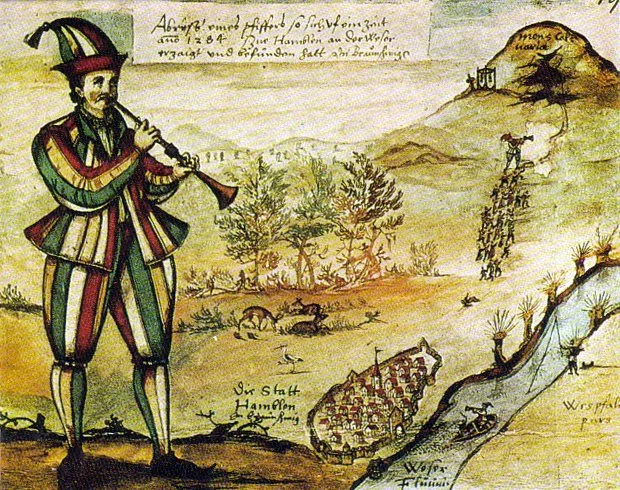
The oldest picture of the Pied Piper copied from the glass window of the Market Church in Hameln/Hamelin Germany (c.1300-1633).
It makes me think of the Pied Piper. His name comes from his clothing—pied means multicolored—and that’s how we know him. That and his magic pipe, which can lead rats and children anywhere he chooses. But I wonder, was the outfit just a marketing ploy to stand out from all the other rat catchers? He did get the job.
Finding my version of the Pied Piper for my books is my current challenge. Any ideas?
Last night was the celebration of San Juan, and in Puerto Rico people head to the beach and jump backwards into the ocean at midnight (or any body of water) for good luck and to wash off any negativity. As a kid, I liked the idea because it meant staying up late when it usually wasn’t allowed. Now, I like the idea of being able to wash away the bad parts of the year and bring in the good. Sort of like a New Year’s do-over. It started out pagan then became Christian, but I think of it as cultural. I’d overlooked it for some years, but this year seemed like a great time to bring it back. I can’t trek to the ocean at midnight where I am, but I can get rid of the old and welcome some new. And another way to mark the middle of the year.
Last night was the celebration of San Juan, and in Puerto Rico people head to the beach and jump backwards into the ocean at midnight (or any body of water) for good luck and to wash off any negativity. As a kid, I liked the idea because it meant staying up late when it usually wasn’t allowed. Now, I like the idea of being able to wash away the bad parts of the year and bring in the good. Sort of like a New Year’s do-over. It started out pagan then became Christian, but I think of it as cultural. I’d overlooked it for some years, but this year seemed like a great time to bring it back. I can’t trek to the ocean at midnight where I am, but I can get rid of the old and welcome some new. And another way to mark the middle of the year.
Late last year I finished my 4 book series and now I’ve been working on a new project ever since. Actually, I’m working on 3 projects at the same time. Because of that, I conceived of Summer Shorts—posts that are short and sweet (which is what I always hope summer will be, but in my area it tends to drag on).
Late last year I finished my 4 book series and now I’ve been working on a new project ever since. Actually, I’m working on 3 projects at the same time. Because of that, I conceived of Summer Shorts—posts that are short and sweet (which is what I always hope summer will be, but in my area it tends to drag on).
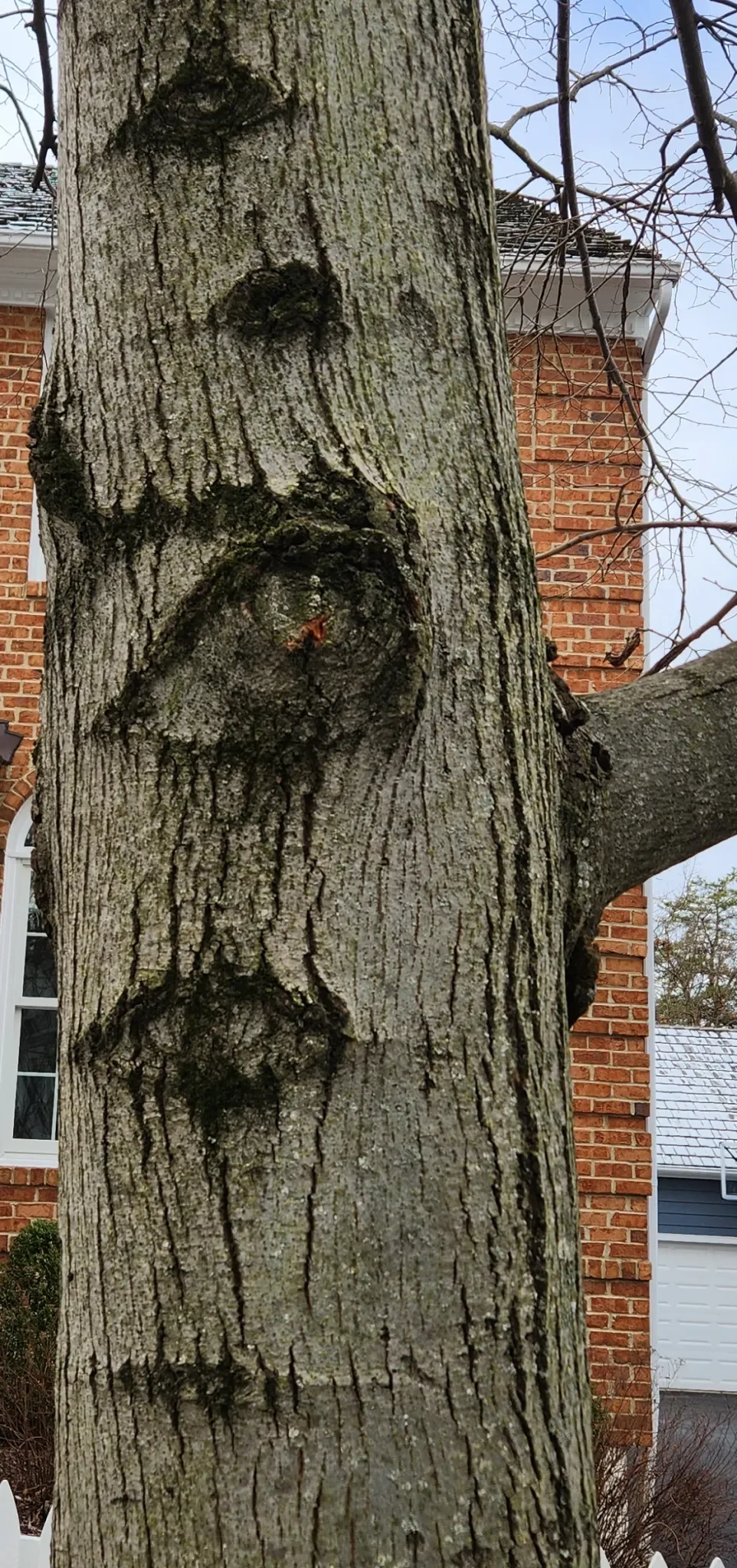
I like the idea of Mary's garden being full of the random. It reminds me of writing. People tend to ask where ideas come from and I want to say silver bells and cockle shells and marigolds all in a row. It wouldn't be far from the truth. An item that seems out of place. A coincidence that bears noting. A tree that has eyes. They all lead to wonder, which leads to a story.
Are you a writer? Are your ideas set or are they more ethereal?
What makes a fairy tale modern? Does it have to be completely original? Is it a traditional story retold with modern sensibilities? Or is there a third option?
Original fairy tales are hard to come by, especially if you agree with the notion that only a set number of stories exist. There are days I believe that (like when I look at the movie landscape full of prequels, sequels and retellings). On good days I know there are new stories—or at least new to me. I haven’t read stories from all the cultures of the world and there are tons.
What makes a fairy tale modern? Does it have to be completely original? Is it a traditional story retold with modern sensibilities? Or is there a third option?
Original fairy tales are hard to come by, especially if you agree with the notion that only a set number of stories exist. There are days I believe that (like when I look at the movie landscape full of prequels, sequels and retellings). On good days I know there are new stories—or at least new to me. I haven’t read stories from all the cultures of the world and there are tons.
Retellings are very popular now. At least half the books in my TBR list are implicitly or explicitly retellings of well-known stories. I know Christmas just past, but my favorite retelling is any movie or TV show that uses A Christmas Carol as a framework.
My Top 3:
A Diva’s Christmas Carol: Love the Behind the Music as a stand-in for the Ghost of Christmas Yet to Come
A Mickey’s Christmas Carol: Great original song
A Muppets Christmas Carol: Piggy is my hero!
Honorable mention for Scrooged, but mostly for Carole Kane
I think a modern fairy tale is all those things—original, undiscovered, retooled and reformed by a deft author—and maybe something I still haven’t thought of yet.
Have you ever noticed that fairy tales don’t start with:
“Once upon a time a forlorn prince looked out his window and wondered if he’d ever find his true love…”
OR
“There was once a princess whose father decreed one day that her potential husband would be determined by a stranger’s ability to outwit a troublesome giant…”
Have you ever noticed that fairy tales don’t start with:
“Once upon a time a forlorn prince looked out his window and wondered if he’d ever find his true love…”
OR
“There was once a princess whose father decreed one day that her potential husband would be determined by a stranger’s ability to outwit a troublesome giant…”
Fairy tales are stories of the fantastical and nothing is more awe-inspiring than someone from lowly beginnings being given the keys to the castle—sometimes literally. They’re a come-up. Would Snow White be a fairy tale if she never left the castle? If Jack was the son of a successful merchant, would we root for him chopping down that beanstalk? I’m guessing not. Fairy tales need someone down on their luck to overcome impossible odds with a magical assist.
The notable exception is Red Riding Hood. Her circumstances are a complete unknown, but we can make assumptions about her background. She has enough money for a red cape—not cheap. Her mother has enough food to send extra to Red’s grandma. And said grandmother has her own place. But Red doesn’t get a prince or a castle. Does that mean it’s less a fairy tale and more a cautionary tale?
I suppose the question is can ordinariness be enough or do fairy tale characters have to be utterly wretched?
Did you know that there's a story that may have inspired The Legend of Zelda? That it includes a precursor to the Sanderson Sisters (in my opinion)? Skelator? A furry, kind version of Smiegel? And best of all, a clairvoyant pig? Have you guessed the story?
Did you know that there's a story that may have inspired The Legend of Zelda? That it includes a precursor to the Sanderson Sisters (in my opinion)? Skelator? A furry, kind version of Smiegel? And best of all, a clairvoyant pig? Have you guessed the story?
It's been years (decades?!) since I've seen The Black Cauldron and somehow none of the above occurred to me until I re-watched it as an adult. It's one of those rare Disney animated movies that didn't do well and has seemingly hidden away from view. I think when I saw it as a kid, I thought it was somehow related to The Sword in the Stone. I was an early lover of Swords & Sorcery (Willow anyone?) Needless to say, it had nothing to do with The Sword in the Stone, it was scarier than I was prepared for, and I erased it from my memory along with The Great Mouse Detective.
Here's some stuff I wish I'd known at the time:
It was based on a series by Lloyd Alexander that has 5 books!
The lead female role was a magical princess, not a scullery maid.
This movie was actually meant for teenagers.
Seeing it again made me wonder. While I will admit it is a seriously flawed movie--like what exactly is Gurgi? A dog? A raccoon? A Fluppy? (Points to anyone who gets that reference)--I can see how the books would have appealed to me. How many stories do we miss out on because it didn't find an audience? (Does anyone else remember The Halloween Tree? Here Come the Grump?)
Are there any stories that feel as though only you know about them because they've been forgotten?
Just to prove that title applies, I don't think it's the first time I've used it.
I read one of the myriad articles about New Year's resolutions in the last days of 2024. One stuck out for me. The idea was not to make resolutions that you don't want to do--that's homework--but to write down things your want to accomplish. The trick, if it can be called that, if to pick very specific things, write them down, and then put them away until next year. That way you're not berating yourself for not sticking to resolutions or dropping them by March.
Just to prove that title applies, I don't think it's the first time I've used it.
I read one of the myriad articles about New Year's resolutions in the last days of 2024. One stuck out for me. The idea was not to make resolutions that you don't want to do--that's homework--but to write down things your want to accomplish. The trick, if it can be called that, if to pick very specific things, write them down, and then put them away until next year. That way you're not berating yourself for not sticking to resolutions or dropping them by March.
To add to that, at the very end of the year you can document how much you've completed thus giving you a starting point for the next year. That way you see progress and not black and white success or failure.
To that end, here are a few of my professional goals:
Novels: Last year I tried something new--working on more than one project at a time. Now I can move forward with all of them getting closer to finishing at least one.
Marketing: It's time to admit I have a major deficiency and that's marketing! But now that I have a whole series under my belt I'm going to take my work seriously and not feel bad if I decide to outsource that particular chore.
Blog/Website/Social Media: Less of a bane than marketing, but more of an obligation than fiction writing, it's still important. I may not love the time it takes away from the kind of writing I love, but I do love the immediacy of publishing and getting feedback within a few days. I can commit to one fairy tale/folklore/myth etc. post a month and one writerly post a month.
And now I'm putting this post up and forgetting about it (fingers-crossed) until next year and if I ever peek I'll remind myself it's about progress.
Have you come across this demarcation—a description of a novel with peppers to explain how “spicy” the writing gets? It’s a handy indicator.
Have you come across this demarcation—a description of a novel with peppers to explain how “spicy” the writing gets? It’s a handy indicator. If you don’t know, according to farofeb.com:
0 – Cozy, no heat (otherwise called “clean” but that sounds judgy regarding the rest of them)
1 – Low Heat, kisses and some intimation with a fade to black
2 – Smoldering, sexual tension, some spice but not graphic, mild language
3 – Hot, more detailed spice and language
4 – Scorching, very detailed spice, graphic language to describe sexual acts
This is all without venturing into erotica, but sometimes the line between scorching and erotica can be blurry in my opinion. For the record, I don’t mind spice in my reading and sometimes I prefer it because it means it’s likely not a YA book, which I’m currently not interested in.
But that’s not what this post is about. It’s about being a writer when the peppers loom. Some of the people who read books 1 and 2 in my Enchanted Path series didn’t read book 3 and likely won’t read book 4 because of spice. One of the subplots of my series is a growing relationship between the MC and her childhood friend. I’d call it slow burn, but then some readers expect that to happen within one book instead of an entire series. It starts between 0 and 1 then grows over the series to between 3 and 4.
How do I account for this at a time when readers essentially want to know everything they’re getting in a novel? Is this a case of the journey being more important than the destination? Do we really need signposts for a meander? These aren’t textbooks or dictionaries. I read for relaxation and to disconnect with the outside world. Then again being an avid reader, I sometimes count on those quick trope descriptors to save time.
There’s no easy answer. Reading is a personal pursuit and so is how you approach it. In the meantime, I hope those of you who don’t mind 3 or 4 peppers, grab some milk and read A Mage’s Path coming November 30th.
In the US, September 15th marks the beginning of Hispanic Heritage Month, which runs until October 15th. Having half of one month and then another month makes for odd celebrations—it sneaks up on you and then leaves almost silently. Sometimes I don’t remember it’s Hispanic Heritage Month until I see a commercial wishing me a happy one.
In the US, September 15th marks the beginning of Hispanic Heritage Month, which runs until October 15th. Having half of one month and then another month makes for odd celebrations—it sneaks up on you and then leaves almost silently. Sometimes I don’t remember it’s Hispanic Heritage Month until I see a commercial wishing me a happy one.
I wondered at the choice. So, I did some research. It turns out it was originally a week for decades and then grew by 1989, which explains why as a kid I didn’t know about it and then suddenly I was eight and we were told we had a month to celebrate. I also learned it’s based on quite a few Latin American independence days, which is why it starts in the middle of September.
I’m hard pressed to relate this to fairy tales because of the lack of correlation. It’s always been difficult to find any original stories that haven’t been influenced by European ones. But there is one I found that I’ve always liked. It’s the legend of the Coquí, the frog of Puerto Rico.
Ignacio, the King of the Forest and a parrot, was disgusted by how lazy and complacent his subjects had become. To encourage them he challenged them to a race and that one of each species could represent them in the race. There would be no consequences for losing, but the winner would be given a surprise gift. The animals chose their strongest and fastest but didn’t take it too seriously. However, the tiny coquí, who had no voice, did. They trained a champion in the hopes it would outstrip the bigger, stronger animals.
The day of the race, the biggest and strongest animals lined up next to the tiny coquí and sprinted forward leaving the frog behind. And yet, the coquí used his powerful legs to jump past the leaders and won. King Ignacio, true to his word, spread his wings and chanted over the tiny frogs and gave them a voice. They, in turn were able to respond with a special song, “COQUÍ, COQUÍ.” And it was a reminder those who are overlooked can make their voices heard.
A comforting thought when your month is really half of two cobbled together.
I think all authors have a similar dream. For me it was writing a book followed by a small but vocal readership that would result in a groundswell of readers. It would happen, and this is important, within my lifetime, and I would spend my days going from readings and signings between growing an impressive list. I might also indulge the fantasy that despite not writing mystery novels my life would be very much like Jessica Fletcher’s.
I think all authors have a similar dream. For me it was writing a book followed by a small but vocal readership that would result in a groundswell of readers. It would happen, and this is important, within my lifetime, and I would spend my days going from readings and signings between growing an impressive list. I might also indulge the fantasy that despite not writing mystery novels my life would be very much like Jessica Fletcher’s.
Note that nowhere in that dream do I include, tweeting, posting, snapping, or anything related to social media. I’ve railed about this before, while quietly conforming to the expectations of a 21st century writer. I started a blog. Created a website. Joined Twitter (may it rest in pieces) and now I’ve joined Instagram. I’m sure some of you are thinking I’m a little late to that, but I believe in fashionable tardiness to most parties.
And yet, as I made the account, ilcruzwrites, I asked myself a question. WWJAD--What would Jane Austen do? Or the Grimm Brothers? Or Dickens? Or any well-known author who doesn’t have to worry about followers or likes.
Well, Austen’s fame grew after her death and the success she knew in her lifetime only came because she published anonymously and at her own risk (i.e. indie publishing).
The Grimm Brothers also toiled in obscurity for a time and only gained traction with each subsequent edition that was tweaked each time to appeal to children (i.e. rewrites based on reader notes).
Dickens was famous for holding readings in Europe and North America to widen his audience (the social media of its day).
By Charles A. Barry
And so I continue, indie publishing, getting beta readers, and trying to use social media to market and find that small but dedicated readership that will make my dreams come true.
Now I just have to learn how to use Instagram. Any thoughts?
I decided early in this blog that I wouldn’t apologize for long absences because it was inevitable. Blogging has always been in service of my writing. Don’t get me wrong—I’ve loved interacting with the blogging community I’ve become a part of and I've made wonderful friends. But I also know that when I have a limited amount of time to pursue writing, my fiction gets priority every time. This is all to say, I’ve been away because I’m writing.
I decided early in this blog that I wouldn’t apologize for long absences because it was inevitable. Blogging has always been in service of my writing. Don’t get me wrong—I’ve loved interacting with the blogging community I’ve become a part of and I've made wonderful friends. But I also know that when I have a limited amount of time to pursue writing, my fiction gets priority every time. This is all to say, I’ve been away because I’m writing.
As you are aware (at least that’s the hope because if you're not, I have to up my marketing game), the next book in my Enchanted Path series, A Mage’s Path, will be the last (more on that later). It has taken longer than expected and while I can’t rule out some subconscious aversion on my part to end something that’s been part of my life for over 10 years, I’m really happy to finish it. Right now, the finished manuscript is out with my editor.
Thanks to cover artist, Jack Baker, for his wonderful design
This year I’m trying something new. Instead of focusing all my writing attention on one project, I’m working on three. A Mage’s Path in in final edits. The second novella in my paranormal romance, The Cemetery Circle, is in its second draft phase. And a new book, which will likely be a duology is being “world-built” and outlined.
So, yeah, I’ve been busy.
But I haven’t forgotten about Fairytale Feminista. Fellow blogger, Ari Meghlen, gave me an idea for a new series of posts I hope to write soon. In the meantime, I hope you’ll join me on my writer website and learn more about finishing my first series.
It's the end of Hispanic Heritage Month in the states and I have a confession to make.
I am a Latin American woman and I don't like magical realism.
It's the end of Hispanic Heritage Month in the states and I have a confession to make.
I am a Latin American woman and I don't like magical realism. It doesn't sound like a scandalous thing to say, but after reading my fair share of Marquez, Borges, Ortega y Gasset, etc. (in the original Spanish) I can soundly say I don't care for it. I also say this knowing how important a genre it has become for the Latino community. I can only speak for myself, but it's not uncommon for Latinos to believe in Catholicism and Paganism at the same time. We've been known to pray to God and also light candles to ancestors to intercede in daily affairs. We can hang a cross at one end of the house and a horseshoe at the other both to ward away the evil eye and negative spirits. Magical realism is a part of our lives.
So I don't mind the idea of magical realism. It's the "literarification" (an invention, I know) of it. I feel about it the same way I feel about Hawthorne. It's overblown and too descriptive with tragedy on every page. But that's not the worst of it. It's a pig with lipstick. Let me explain.
As I'm sure most readers of this blog know, I read fairy tales. I don't just read them for pleasure, but also to understand whether they still speak to a modern mind. For all intents and purposes, magical realism is just long form fairy tales. If you don't know, magical realism is when the fantastical is treated as normal in everyday life. What could be more in keeping with that genre than stories which include fairy godmothers arriving to help scullery maids attend royal balls or planting seeds from a stranger that become portals to a world of giants? And yet, magical realism goes on for pages and pages doing what folklorist can accomplish in 1,000 words or less.
Don't get me wrong. I don't object to length. I like weighty tomes with tons of world-building and fantasy settings. My problem is magical realists, literary magical realists, write what could be interesting fantasy stories, but because the idea of genre fiction is somehow less than worthy choose to add pretension.
That is not to say some people haven't done it well, usually with a lighter touch. These tend to be tagged as rom-coms or cozy fantasy. Or sometimes they work better as movies, such as Like Water for Chocolate, Amelie and Big. There are times I wish I liked it more--it seems like the perfect fit on paper--but being a reader who actually enjoyed the Shakespeare unit and F. Scott Fitzgerald among other literary classics, I've yet to find the literary magical realism book that didn't feel like work.
Maybe I haven't found the recommendation. Any to suggest?
Writers keep their eyes open for inspiration, which makes us notice a lot more than most. What random piece of everyday beauty do you love?
Back when I hosted a monthly Meet An Indie Author Monday (MAIAM, I love a good palindrome), the first interview I posted was my own. And this was one of the questions:
Writers keep their eyes open for inspiration, which makes us notice a lot more than most. What random piece of everyday beauty do you love?
My answer was, in retrospect, was very subdued because I wanted to keep my responses short and pithy.
Doors. Doors have become so humdrum, so when I walk by a really gorgeous door I can't help but stop. An interesting handle, nice ironwork, a good heavy doorknocker. Sometimes I take a picture.
In truth, I LOVE doors—interesting doors, old doors, oddly-shaped doors, and doors that open with skeleton keys. I recently went on vacation to Switzerland and Bern is a door-lovers paradise!
As someone who writes about fairy tales, I think I’m in search of the door that will take me to another realm even knowing that fairies aren’t exactly known for their hospitality. There’s an allure to a door, a mystique. At least while it stays closed. It’s the embodiment of possibilities.
What mundane thing do you imbue with magical possibilities?
A blogger I follow once wrote about the importance of celebrating writing milestones and I have a big one today. My blog!
There are days when I wonder why I latched on to fairy tales as my theme for a blog. I knew I didn’t want to add another how-to write blog to the world, mostly because I didn’t feel qualified to add my two cents. In truth I still don’t, but for different reasons—namely my way of writing works for me, but not necessarily anyone else.
A blogger I follow once wrote about the importance of celebrating writing milestones and I have a big one today. My blog!
There are days when I wonder why I latched on to fairy tales as my theme for a blog. I knew I didn’t want to add another how-to write blog to the world, mostly because I didn’t feel qualified to add my two cents. In truth I still don’t, but for different reasons—namely my way of writing works for me, but not necessarily anyone else.
I revisited my first post, Welcome to My Corner, and it brought back a lot of memories. I had finished my first book (or so I thought it was finished, but it was really just the start of my journey into editing—a story for another time) and had been told I needed to have an online presence if I was serious about becoming a published author. My daughter was still young enough to be read to and I was reading her classic fairy tales, which I found intriguing and disturbing.
It's been ten years since I started this blog and I’m still writing about fairy tales. I’m just shy of 250 followers, which I know doesn’t sound like a lot, but to me is amazing. I’ve written four books and published three (more details on book four soon). These numbers all seem small at a time when only people who have hundreds of thousands of followers and churn out books every six months, but I’m really proud of my accomplishments.
So, readers, Happy Blogoversary! Thanks for reading and keeping up with my corner of the world.