
The Fairy Tale Feminista
Answering life’s questions one fairy tale at a time.
Fairy Tales for All
I came to an odd and slightly disturbing realization the other day. I haven’t read any books written by men in years. This was not intentionally done. But it did get me thinking about the type of books I read and whether it’s become something niche. I read fantasy—all kinds, historical fiction, and mystery when I need something quick and dirty (that has nothing to do with spice levels, BTW). And yet for more than a few years, none of those books were written by men.
I came to an odd and slightly disturbing realization the other day. I haven’t read any books written by men in years. This was not intentionally done. But it did get me thinking about the type of books I read and whether it’s become something niche. I read fantasy—all kinds, historical fiction, and mystery when I need something quick and dirty (that has nothing to do with spice levels, BTW). And yet for more than a few years, none of those books were written by men.
I admit, I’ve made an effort to read indie authors and they are predominately women. There tends to be at least a romantic subplot and, unsurprisingly, quite a few have a fairy tale bent.

Is that the reason?
It’s a long-held belief that fairy tales are generally the domain of women and girls. Recently, writers have made an effort to make them accessible to all women and girls, where in the past they were clearly dominated by a young European aesthetic. Now they encompass various ages, ethnicities, races, body types—but what about the guys?
I read a lot of fairy tale retellings, and the audience is clearly female. Why? Is there something inherently feminine about fairy tales? The protagonists are both male and female. Jack and the Beanstalk, The Valiant Tailor and The Golden Goose all have male leads. Some, like Beauty and the Beast, have dual points of view. And superhero stories, long considered the purview of men, are just fairy tales with more fighting. So, why the discrepancy?
I don’t have an answer for any of it, but I hope you do. Any recommendations for fairy tale retellings written by men?
Have you noticed any unintentional patterns in your reading?
Fairytale Retellings 2022
Before you ask, no that is not a typo and yes I am aware we are now in 2023. But the turning of the year was bumpy complete with an injury and a rather bad cold. Because of it, I got a slow start to all my work. But I’ll take a note from all the fairy tales I’ve read and know that how you start isn’t necessarily how you finish. In that spirit, I’m starting the year with a list, my list of fairytale-based reading from 2022
Before you ask, no that is not a typo and yes I am aware we are now in 2023. But the turning of the year was bumpy complete with an injury and a rather bad cold. Because of it, I got a slow start to all my work. But I’ll take a note from all the fairy tales I’ve read and know that how you start isn’t necessarily how you finish. In that spirit, I’m starting the year with a list, my list of fairytale-based reading from 2022
At the beginning of the year I read Shanna Swendson’s Fairy Tale trilogy. It’s a classic story in a modern setting about a woman who learns she and her sister are of the Fey and how that changes their lives. I don’t believe in spoilers, but I will say that although I loved this trilogy I know it was supposed to be longer. Some of the story for both sisters were left unresolved, which left me frustrated. As a writer I understand that life can get in the way when you have to finish a series, but as a reader my trust in a writer is broken when a story’s resolution isn’t addressed in a timely manner. And yet, I recommend all of them.

Toward the middle of the year I needed something lighter. I also have a tendency to read at least one Jane Austen retelling a year because I think of her novels as long form fairy tales. Somehow Maria Grace knew what I was looking for and as a bonus threw in dragons, my favorite cryptid. I made my way through the first three books of the Jane Austen’s Dragons series, but there are 11 so far. I intend to read each of them when I need a respite from my usual weightier reading. I think it’s important to have reading breaks while still finding a way to read and this fit the bill. And a special mention for the covers, which I loved!

My final reading was a continuation of a series I started the previous year. A Crown of Wishes was one of those books that I love and hate. I love them so much that I read them from cover to cover in an obscenely short amount of time, which I hate because the next book I read can’t possibly measure up. It’s based on Hindu mythology and is the second book in the world Roshani Chokshi created within that framework. It had everything I love in a book—mythology, a warrior woman protagonist, slow-burn romance, lots of magic and excellent writing.

I hope to have a list like this every year. Do you have any suggestions for this year? Do you have any go-to kinds of books? Happy 2023!
Fairy Representation
A lot has been said and written about the drawbacks to revisiting the same stories over and over again. As a person who has written novels based on nursery rhymes and fairy tales, I prefer to look at story re-imaginings as a way to write myself and people like me into stories we've told for centuries. And I'm clearly not alone. Fairy tale retellings are very popular and for the very reason I described. The proof is Hallmark holiday movies.
A lot has been said and written about the drawbacks to revisiting the same stories over and over again. As a person who has written novels based on nursery rhymes and fairy tales, I prefer to look at story re-imaginings as a way to write myself and people like me into stories we've told for centuries. And I'm clearly not alone. Fairy tale retellings are very popular and for the very reason I described. The proof is Hallmark holiday movies.

I participated in a one-woman letter-writing campaign a few years ago. Every year I would compliment their programming and then ask them to consider making the characters more representative of the viewing audience. And over the years slowly (very slowly) but surely Hallmark has included people of color, movies about Hanukkah and this year, same-sex couples. A special thrill was seeing Julie Gonzalo, a not infrequent actress in Hallmark movies actually getting to play a Latina and her love interest was Black! I will admit that not all of them are great and some are downright bland, but it's sort of the point. Sleepy little rom-coms that normalize everyone's stories are just as important as mixed race and same-sex couples proliferating commercials.
Seeing yourself in a story gives it special significance and should never be discounted.
What stories do you want to see retold?
Also Starring...A Secondary Fairy Tale Character
Fairy tale retellings has become its own sub-genre. We want to keep fairy tales in our lives but understand that the stories are problematic from a modern standpoint. We want agency, depth and inclusivity—a tall order for something written centuries ago. But we do our best, giving heroines backstories and pluck in the hopes of correcting anachronisms.But what about the other characters? Aren’t they just victims of the same outmoded storytelling? How many times have I read that secondary characters should be just as interesting as the protagonist?My curiosity started when I read Gregory Maguire’s Confessions of An Ugly Stepsister. They did treat Cinderella abominably, but they took their cues from their mother. And there were two of them—maybe it was a welcome change from sibling rivalry to direct any animosity at a picked on step-sister. As far as I know, it’s the only time a secondary character from a fairy tale was the star of a fairy tale retelling. What if we knew more about Jack’s mother before he climbed that beanstalk? Who wouldn’t want to know more about the dwarves that housed Snow White? And what about the mother and grandmother in Red Riding Hood?These are the rabbit holes my mind tumbles down when given free reign. Speaking of, what about that white rabbit? I like to think he orchestrated a coup against the tyrannical Queen of Hearts. My rather rambling point is retellings have only scratched the surface of possibilities.Who’s your favorite secondary character from a fairy tale? Have you read any retellings that have done that character justice?
Happily Ever After by the Fairytale Feminista
I’ve been writing about happily ever after a lot lately—questioning its validity, holding it up to a modern lens—and it got me thinking…What is happily ever after in a fairy tale sense? I can’t speak to everyone’s needs and feelings, but I know what it would take for me to consider any popular fairy tale a happy ending. The women must have choices.Sleeping Beauty: After thanking the prince for his helpful, yet impulsive act, Aurora (in the original she doesn’t have a name, so I opted for the Disney name) takes control of her kingdom and institutes a constitutional monarchy knowing that consent is the first rule of any society. She and the prince remain friends and allies.Snow White: Her time in suspended animation gives Snow time to think about her plight and that of her stepmother’s. She doesn’t forgive her for the cruel and heartless acts committed against her, she understands that in their world, a woman’s beauty is everything. Prince Charming revives her and asks for her hand in marriage, but she asks for a place with the palace scholars to ensure she has other options. Snow White becomes an advisor to Aurora.Cinderella: On the ride back to the castle, Cinderella asks the prince if they can take it slow and get to know each other better. She agrees to live in a separate wing in the castle and be formally courted. During that time, she works on converting the rooms for other young ladies who find themselves at a loose end after being released from slavery.Rapunzel: Wandering the world with twins strapped the her back makes Rapunzel think up new and inventive ways to make her life easier. When she finally finds the prince (and cures his eyesight), she’s able to take all the innovations she’s created and make them accessible to other mothers in the kingdom.Rumpelstiltskin: Solving the riddle of the little imp’s name that wanted to steal her child was just another instance of someone trying to control her. She sues her husband, the king, for custody of their child and a divorce (with her new skills finding information the king doesn’t want exposed) and opens her own private investigative service specializing in fairy affairs.The Little Mermaid: You’ve got me there! She had no good choices and happily ever after just wasn’t an option.Beauty & the Beast: After Belle saves the beast (a nice change to the genre norm), she realizes she can’t go home, but can’t stay with the beast who kept her on pain of killing her father. Instead, she decides striking out on her own can’t be any more frightening than living with a monster. Her gardens are the envy of all, although no one can begrudge her its beauty because of her generosity. Her roses are world-renowned. I’m sure there are other ways to make these stories tailored to anyone’s version of happily ever after. Cinderella could start her own house cleaning service. Snow White might start a gem consortium with the dwarves. Or maybe a twist ending—The Mermaid takes over for the sea witch, for example. Or the ladies could stay with their princes, but on more equal footing. Just so long as they chose their endings. What about you? Have you considered defining what happily ever after looks like in your favorite fairy tale?
Feminista's Reads-in-Progress
 You've heard it before: if you want to be a writer, be a reader first. Well, that's never been a problem for me! However, with all the unexpected marketing
 hassles work learning experiences I've been undergoing, it's taking me longer than usual to finish a book. But I have a few on the fire that I think anyone interested in fairy tale retellings: Fearless Girls, Wise Women & Beloved Sisters by Kathleen Ragan 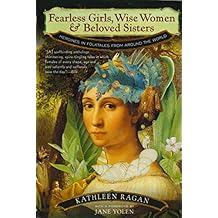 A round-the-world trip through fairy tales that focus on stories outside of the European canon and women who don't need saving. A must for Fairytale Feminista fans! The Woodcutter by Kate Danley
 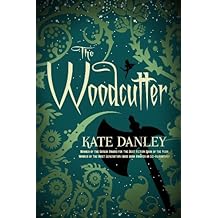 This is a bit of a departure for me in terms of format. I've been playing around with listening to books when taking walks--I don't read and walk as well as I used to--and this one is a perfect start! The narrator, Sarah Coomes, makes the story come to life in a way that reminds me of story time at the library when I was a kid. It combines fantasy, fairy tale retelling, and mystery to brilliant effect. After Alice by Gregory Maguire
 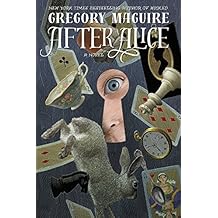 I've long been a fan of Gregory Maguire. Sometimes I love his stories and other times it's a slog. I haven't decided on this one yet--a new take on the story of Alice's Adventures in Wonderland through the eyes of her friend, Ada--but I really like the absurdist story of Alice. How about you, FF fans? Are there any Reads-in-Progress (RIPs, unfortunate, I know) that may appeal to fairy tale revisionists?


Never miss a new post
Subscribe to the Fairy Tale Feminista