
The Fairy Tale Feminista
Answering life’s questions one fairy tale at a time.
Finding A Name
One of my favorite fairy tales is Alice’s Adventures in Wonderland and its subsequent Through the Looking-Glass and What Alice Found There. When I was a girl, I read the book and watched almost every version on TV and in the movies. I didn’t realize it then, but Alice’s escapades began my own quest to find stories of female adventure. Considering they were written in 1865 and 1871, respectively, I’d consider them some of the earliest forms of feminist fairy tales.
One of my favorite fairy tales is Alice’s Adventures in Wonderland and its subsequent Through the Looking-Glass and What Alice Found There. When I was a girl, I read the book and watched almost every version on TV and in the movies. I didn’t realize it then, but Alice’s escapades began my own quest to find stories of female adventure. Considering they were written in 1865 and 1871, respectively, I’d consider them some of the earliest forms of feminist fairy tales.

Then again, there is her red-caped sister in adventuring, Red Riding Hood. My feelings about Red have run the gamut. Sometimes I think of her as a neglected child—who sends their little girl into a wolf-infested forest to bring food to an elderly woman? Maybe it’s the Latina in me, but shouldn’t Abuela have moved in with the family already? Other times I think of Red as a hapless girl talking to strangers and too ignorant to recognize that her granny has been replaced by a furry predator.
But in my quiet moments I wonder if she isn’t a bit of a rebel. She’s sent to the woods and wanders from the path. She converses with a dangerous stranger. And when confronted with an obvious fake grandmother, it almost seems like she’s flirting with her ridiculous questions. If Little Red Riding Hood had been written today, she’d be a badass! Maybe being eaten was a calculated risk in order to find her grandmother. I’d read that story.

My point is, we (myself included) spend a lot of time talking about fairy tales that feature women and girls who seem to lack agency, but there are plenty of interesting fairy tale characters who also fueled my love of women adventurers. It was what gave my blog its name.
Ravens, Writing Desks, and Series Writing
When I was little I used to watch certain videos over and over again. One of them was Disney’s Alice in Wonderland. My favorite part was the mad tea party. It looked like it would be a good time if you weren’t desperately trying to get home. I imagined drinking cups of tea, talking to the March Hare and the Mad Hatter and coming up with crazy riddles that no one could solve.
When I was little I used to watch certain videos over and over again. One of them was Disney’s Alice in Wonderland. My favorite part was the mad tea party. It looked like it would be a good time if you weren’t desperately trying to get home. I imagined drinking cups of tea, talking to the March Hare and the Mad Hatter and coming up with crazy riddles that no one could solve.
If you search for the answer to “Why is a raven like a writing desk?” on the internet, everyone has an answer. When I finally read Alice’s Adventures in Wonderland and Alice through the Looking Glass, I learned that the Mad Hatter didn’t know the answer either. In graduate school I wrote a paper on the mind of Charles Dodgson, aka Lewis Carroll. He was a mathematician who wrote the Alice books as a way to entertain the children of the Dean of Christ Church at Oxford. And it was written during the Victorian Era when the fanciful and the scientific were by turns at odds and in agreement. He admitted that many people wrote to him asking for the answer to the unanswered riddle.

“Enquiries have been so often addressed to me, as to whether any answer to the Hatter’s riddle can be imagined, that I may as well put on record here what seems to be a fairly appropriate answer, viz: ‘Because it can produce few notes, tho they are very flat; and it is never put with the wrong end in front!’ This, however, is merely an afterthought; the riddle, as originally invented, had no answer at all.” –Lewis Carroll
In other words, he wrote the question without having an answer. Sometimes when I’m struggling with edits for my series and feel inadequate when I have to refer to my notes or previous books to remember what one of my characters looks like, or where someone lives in relation to their mode of transportation, I think of Charles Dodgson and feel less frazzled. Series writing is like an unanswerable riddle—it’s open-ended, has tons of possibilities and relies on whoever is in front of it. Now back to the slog…
Oh, my favorite answer to the raven/writing desk question is neither is made of green cheese. It’s correct and absolutely ridiculous, which is what series writing can feel like sometimes.
Not all those who wander...
When I was about eight, I watched Alice in Wonderland over and over again. I loved the chatty and catty flower garden. I memorized all the Cheshire Cat's lines. I hated the ending. I didn't want Alice to back to her old life. I hoped she would learn to navigate the ins and outs of Wonderland.
When I was about eight, I watched Alice in Wonderland over and over again. I loved the chatty and catty flower garden. I memorized all the Cheshire Cat's lines. I hated the ending. I didn't want Alice to back to her old life. I hoped she would learn to navigate the ins and outs of Wonderland. Later, I read Through the Looking Glass and learned that Alice became a queen--the first in my reading of fairy tales because most girls became princesses. But she still went back, discovering the whole episode was a dream.This morning, while searching my brain for a post topic, I thought about Alice and her adventures. And that led to other girls who attempt escapades and the outcomes.Firstly, they are never undertaken by choice. In the Wizard of Oz, Dorothy is conked on the head and awakens in Oz, all the time demanding to make it back home despite having wanted to run away with Toto before the tornado. Red Riding Hood was on an errand for her mother.Secondly, the girls always want to return home. Dorothy and Alice takes on unimaginable risks because they want to go home. No matter how much danger they face and overcome, they still want to get back to the worlds they knew.Lastly, and almost peripherally, they came from nice homes. These weren't the Cinderellas or the Snow Whites, who were mistreated. Maybe that's why they were in such a lather to get back home.Of course the comparison is when boys from fairy tales leave home and go on adventures. They seek fame, fortune and tend to get both and much more. They never return home and really don't want to return. Sometimes I'd watch Alice in Wonderland and wished she'd wandered a little longer.Until today, I didn't know who to attribute the "Not all those who wander are lost." I've learned it came from J.R.R. Tolkien and The Fellowship of the Ring. It got me thinking about the need to wander, if only for a change of scene. So maybe the saying could be, "Not all those who wander need return."
Feminista's Reads-in-Progress
 You've heard it before: if you want to be a writer, be a reader first. Well, that's never been a problem for me! However, with all the unexpected marketing
 hassles work learning experiences I've been undergoing, it's taking me longer than usual to finish a book. But I have a few on the fire that I think anyone interested in fairy tale retellings: Fearless Girls, Wise Women & Beloved Sisters by Kathleen Ragan 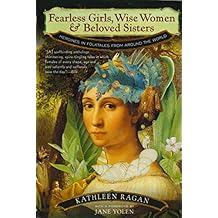 A round-the-world trip through fairy tales that focus on stories outside of the European canon and women who don't need saving. A must for Fairytale Feminista fans! The Woodcutter by Kate Danley
 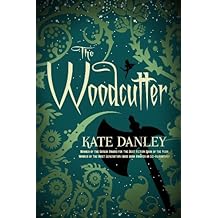 This is a bit of a departure for me in terms of format. I've been playing around with listening to books when taking walks--I don't read and walk as well as I used to--and this one is a perfect start! The narrator, Sarah Coomes, makes the story come to life in a way that reminds me of story time at the library when I was a kid. It combines fantasy, fairy tale retelling, and mystery to brilliant effect. After Alice by Gregory Maguire
 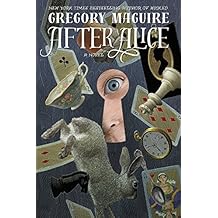 I've long been a fan of Gregory Maguire. Sometimes I love his stories and other times it's a slog. I haven't decided on this one yet--a new take on the story of Alice's Adventures in Wonderland through the eyes of her friend, Ada--but I really like the absurdist story of Alice. How about you, FF fans? Are there any Reads-in-Progress (RIPs, unfortunate, I know) that may appeal to fairy tale revisionists?

Never miss a new post
Subscribe to the Fairy Tale Feminista